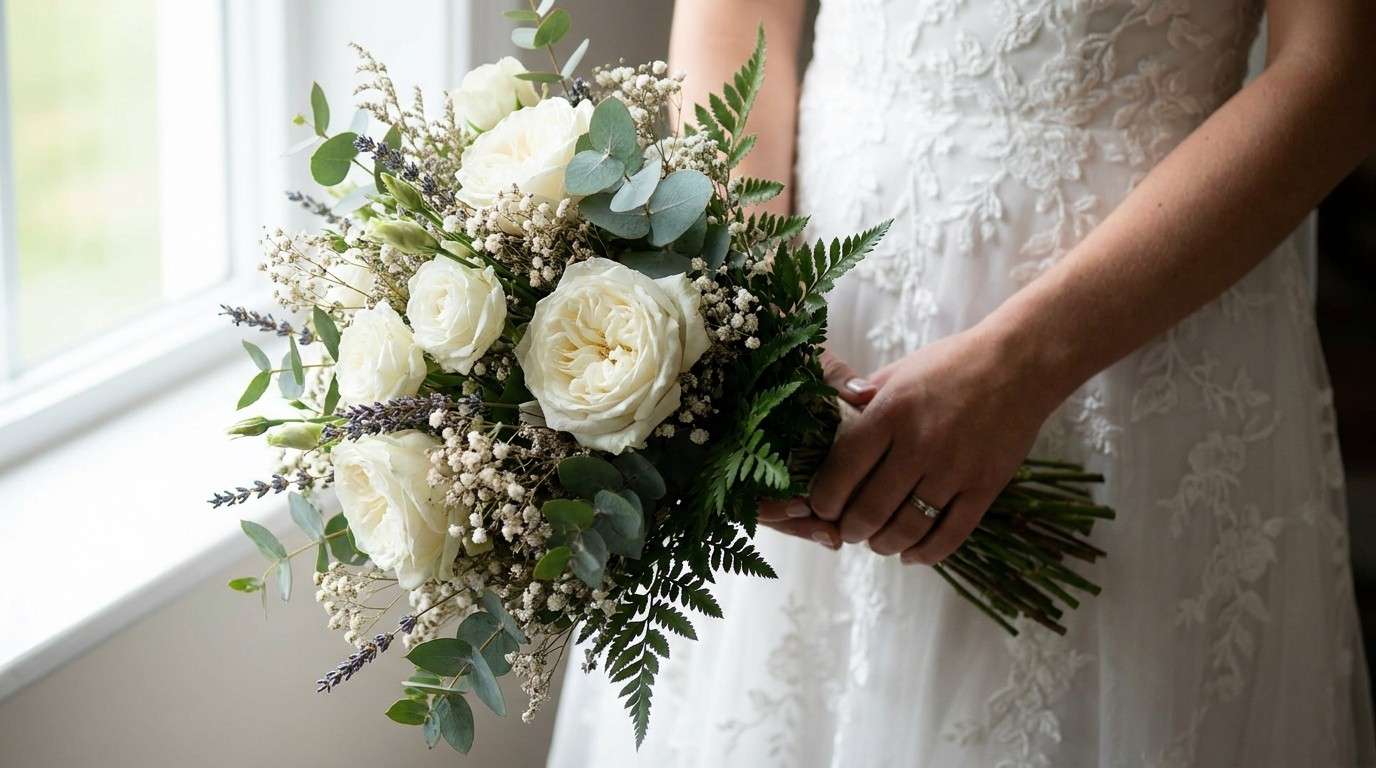
Bridal bouquets is one of the most photographed objects at your entire wedding. It’s in your hands during the ceremony, the first look, the walk down the aisle, and every major photo moment of the day. Choosing the right bouquet — the right flowers, the right shape, the right color palette — makes a genuine difference in how you look and feel. This guide covers 40+ wedding bouquet ideas for every style, season, and budget, with real tips for DIY options and ways to cut costs without cutting beauty.
Classic White Rose Bouquet
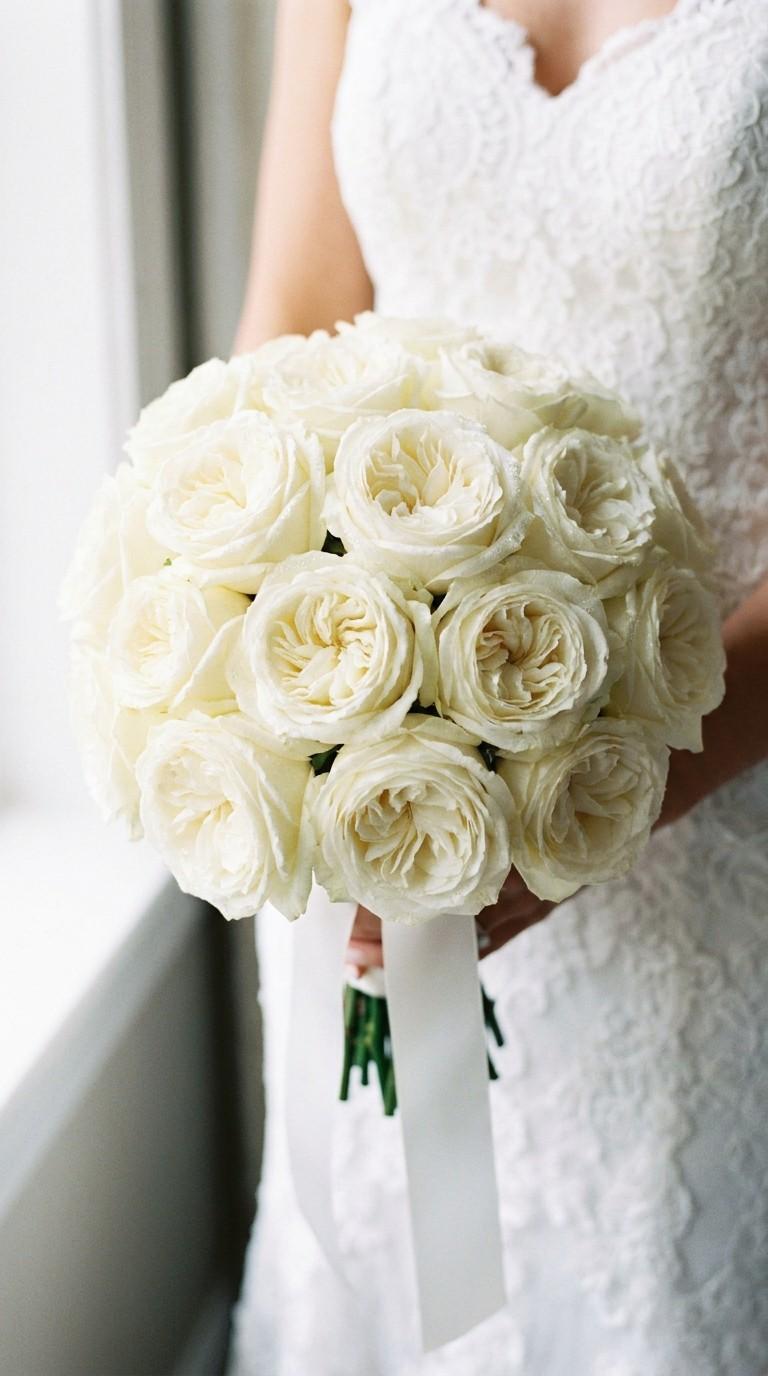
The classic white rose bouquet is timeless for a reason.
White roses symbolize purity, new beginnings, and love. They photograph beautifully against any wedding gown — white, ivory, blush, or colorful.
Types of white roses to consider:
- Garden roses (large, full, peony-like — very luxurious)
- Standard roses (more affordable, classic shape)
- Spray roses (small clusters, more texture)
- Ranunculus (not a rose, but looks similar — often more affordable)
Budget tip: Garden roses are expensive. Ranunculus or large standard roses can create an almost identical look for significantly less. A full white rose bouquet from a local wholesale flower market can be assembled for $60–$120 if you DIY it.
DIY difficulty: Low. Round bouquets are one of the easiest styles to assemble yourself. Spiral the stems, wrap tightly with floral tape, and finish with ribbon.
Ribbon options: Satin, silk, velvet, or dried ribbon — each changes the feel of the final bouquet.
Wildflower Meadow Bouquet
A wildflower bouquet looks like it was gathered from a field on the morning of the wedding.
It’s loose, untamed, and full of color. It suits outdoor, rustic, or bohemian weddings perfectly.
Typical wildflower mix:
- Lavender, daisies, cornflowers, Queen Anne’s lace
- Sunflowers, black-eyed Susans, chamomile
- Any combination of seasonal blooms in a loose, natural palette
Budget tip: Wildflower bouquets are among the least expensive to create. Because the style is intentionally loose and mixed, you don’t need expensive flowers. Many of the blooms can be sourced from a grocery store flower section, a farmers market, or even your own garden for under $30–$50.
DIY tip: Don’t arrange these too carefully. The looser and more natural, the better. Gather in your hand and wrap with twine or natural raffia for a completely authentic feel.
Best wedding styles: Garden parties, outdoor ceremonies, barn weddings, beach weddings.
Peony Bouquet
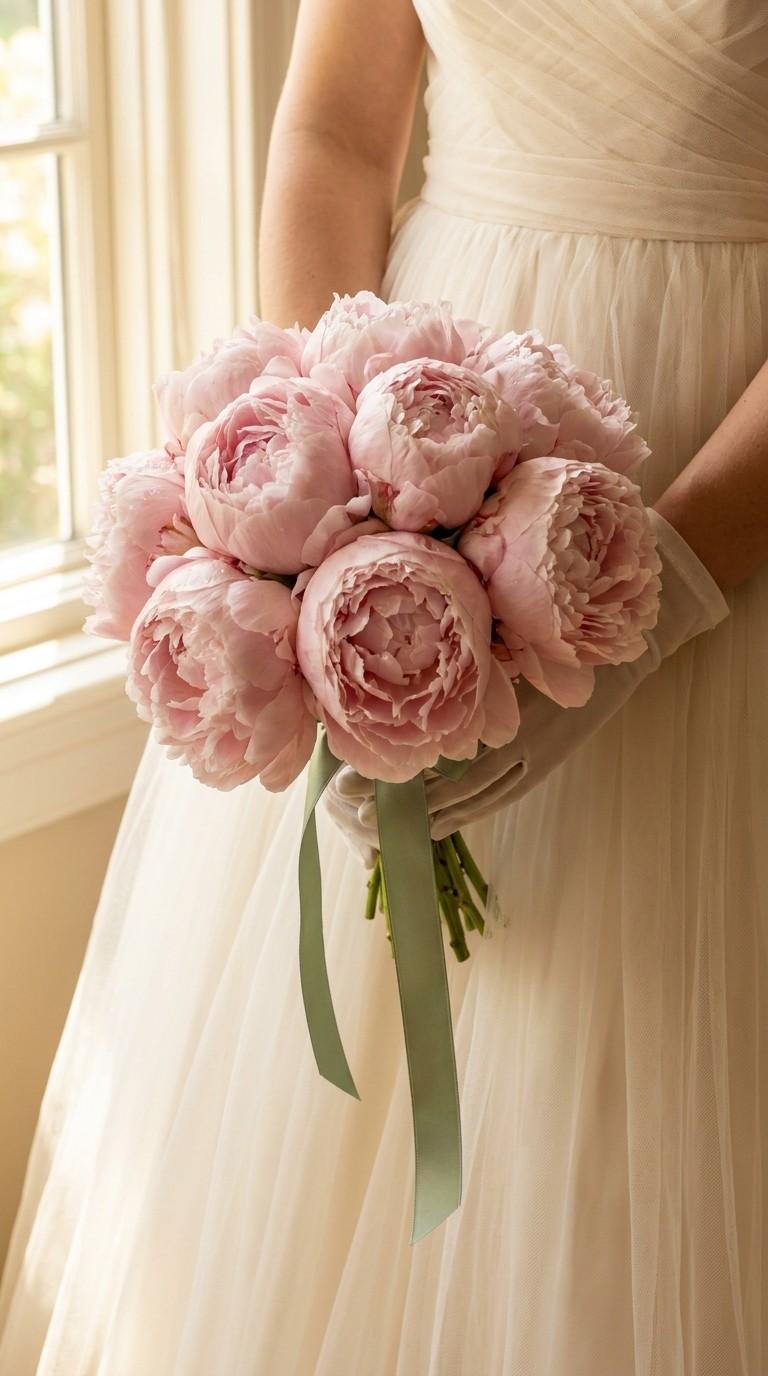
Peonies are the romantic flower of the wedding world — and their short season makes them feel even more special.
A peony bouquet is full, soft, and absolutely stunning in photographs. The large, ruffled blooms create volume and texture that photographs beautifully from any angle.
Peony colors available:
- Soft blush (the most popular wedding choice)
- Deep coral or hot pink
- White or cream
- Deep burgundy (for fall weddings)
Season: Peonies are in season from late spring through early summer (May–June). Out-of-season peonies can be very expensive or hard to source.
Budget tip: If your wedding falls outside peony season, ranunculus makes an excellent (and often cheaper) substitute. Large garden roses also mimic the peony look.
In-season tip: Source directly from a wholesale flower market or order from FiftyFlowers or Blooms By The Box for bulk pricing. A bouquet’s worth of peonies can cost $40–$80 wholesale versus $150–$300 through a florist.
Tropical Bouquet
Tropical bouquets are bold, graphic, and completely unforgettable.
They suit destination weddings, beach ceremonies, and couples who want color and drama in place of traditional florals.
Tropical flowers for bouquets:
- Bird of paradise (the most dramatic option)
- White or purple orchids
- Heliconia
- Anthurium
- Large tropical leaves (monstera, banana leaf, palm)
Color palettes:
- Vibrant (coral, hot pink, orange, yellow)
- White and green (clean, modern tropical)
- Purple and white (more romantic)
Budget tip: Many tropical flowers are actually more affordable than premium roses. Orchids in bulk, anthurium, and tropical greens can be purchased inexpensively at wholesale markets.
DIY consideration: Tropical bouquets are relatively simple to arrange because the architectural flowers do most of the visual work. You need fewer stems to make a big impact.
Dried Flower Bouquet
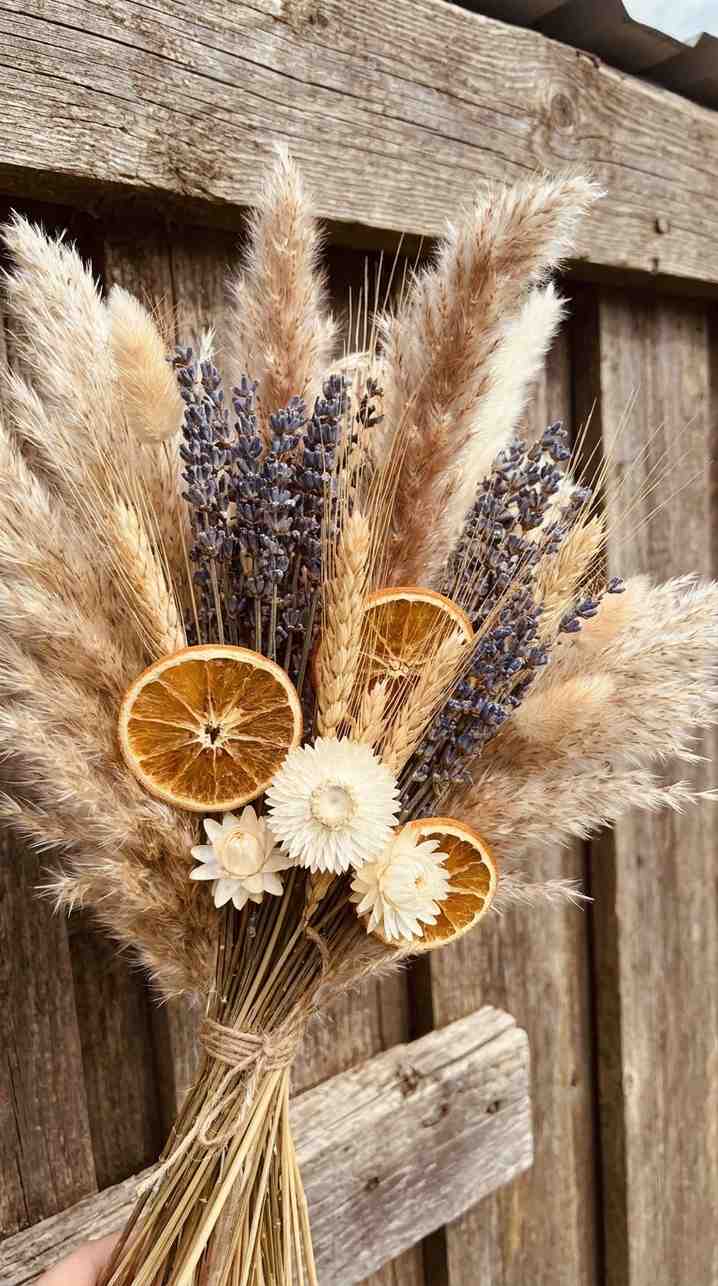
Dried flower bouquets are having an enormous moment — and for very good practical reasons.
A dried bouquet can be made months in advance and kept as a permanent keepsake after the wedding. It never wilts. It’s incredibly durable for outdoor or warm weather weddings.
Popular dried flower elements:
- Pampas grass (soft, feathery plumes)
- Dried lavender (fragrant and textured)
- Bunny tail grass
- Dried roses or garden roses
- Wheat stalks
- Dried orange or lemon slices
- Lunaria (honesty plant — translucent silver seed pods)
Color palette options:
- All neutral (sand, cream, ivory — very editorial)
- Warm earthy (rust, terracotta, warm brown)
- Blush and sage (romantic and natural)
Budget tip: Dried flowers are significantly less expensive than fresh. Many elements can be found on Amazon, Etsy, or at craft stores (Michaels, Hobby Lobby) for $5–$20 per bunch. A complete DIY dried bouquet can cost as little as $40–$80.
Cascading (Waterfall) Bouquet
The cascading bouquet is the most dramatic and formal bouquet style — long, flowing, and unmistakably classic.
Flowers trail downward from the bridal bouquet in a waterfall shape. It’s associated with formal, traditional, and black-tie weddings.
Flowers that cascade beautifully:
- Orchids (the most elegant choice for cascades)
- Stephanotis
- Ivy and trailing greenery
- Long-stemmed lilies
- Wisteria or lilac (if in season)
Who it suits: Brides in full ballgowns or formal cathedral-length gowns. The drama of the cascade needs an equally dramatic gown to balance it.
Practical note: Cascading bouquets are heavier and more challenging to hold than round bouquets. They require more practice to carry naturally.
Budget tip: Because cascading bouquets require so many flowers and significant labor to construct, they’re among the more expensive styles through a florist. DIY is possible but requires significant skill. A professional cascade typically costs $200–$500+.
Greenery and Foliage Only Bouquet
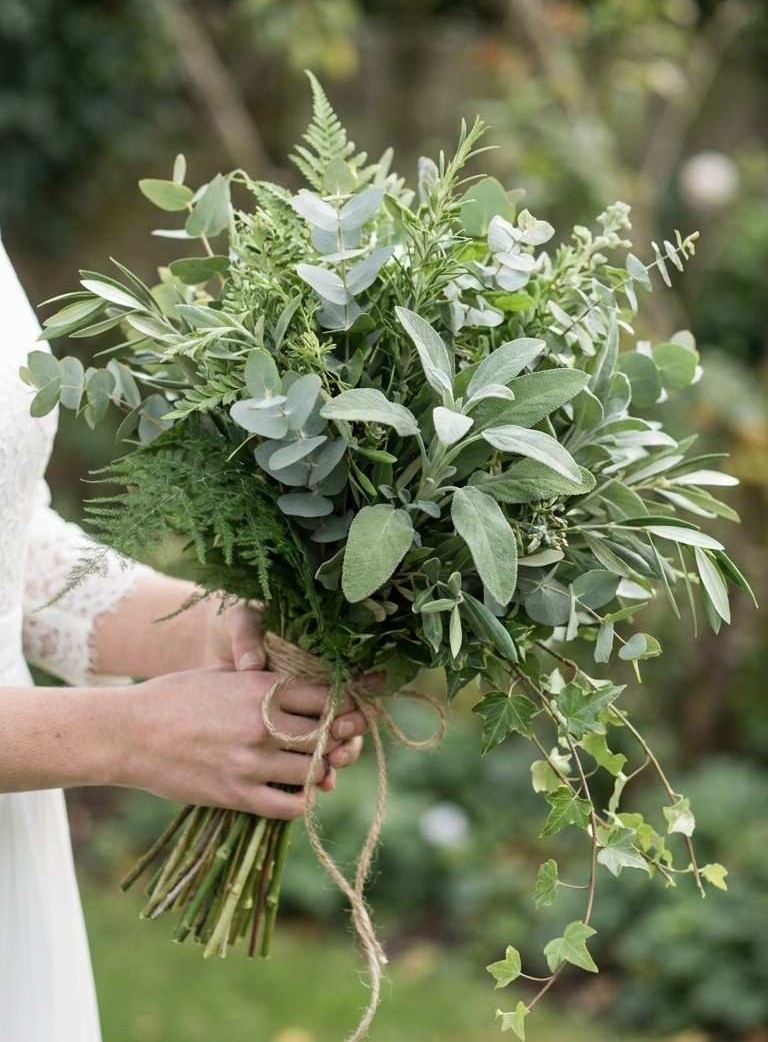
A bouquet made entirely of greenery — no flowers at all — is one of the most sophisticated and modern choices a bride can make.
The variety of greens (eucalyptus, fern, sage, olive, rosemary, smilax) creates unexpected texture and depth. It’s botanically rich in a way that flowers alone can’t achieve.
Why green bouquets work:
- They photograph beautifully against white or ivory gowns (the contrast is stunning)
- They’re fragrant (rosemary, eucalyptus, herbs)
- They’re typically very affordable
- They suit minimalist, organic, or non-traditional couples
Budget tip: Greenery is the most affordable botanical material available. Wholesale eucalyptus costs a fraction of any flower. A full greenery bouquet can be made for $30–$60 DIY.
Best wedding styles: Modern minimalist, garden, outdoor barn, non-traditional ceremonies.
DIY tip: Eucalyptus alone — one type or multiple varieties — makes a strikingly beautiful bouquet with almost no arrangement skill required.
Sunflower Bouquet
Sunflowers are the happiest flowers in any garden — and they bring that energy straight into your wedding.
A sunflower bouquet photographs with incredible color and warmth, especially in golden afternoon light. It’s cheerful, genuine, and unpretentious.
Best combinations with sunflowers:
- Sunflowers + lavender + baby’s breath (classic rustic combination)
- Sunflowers + wheat stalks + greenery (harvest-style)
- Mini sunflowers + white daisies + chamomile (softer and more delicate)
- Sunflowers alone in a tight round bunch (bold and graphic)
Budget tip: Sunflowers are among the most affordable wedding flowers available. A dozen sunflowers costs $10–$20 at most grocery stores and farmers markets.
Best wedding styles: Outdoor barn weddings, summer garden ceremonies, country-style weddings, casual outdoor celebrations.
Season: Sunflowers are most affordable and available July through September.
Monochromatic White Bouquet
An all-white bouquet sounds simple — but done well, it’s one of the most sophisticated floral arrangements possible.
The key is variety of texture and form within the white palette. Different white flowers — ranunculus, anemones, sweet peas, garden roses, tulips, peonies — all have different petal shapes and surface qualities. Together, they create a rich, layered arrangement despite being one color.
White flowers to include:
- White ranunculus (soft, layered)
- White anemones (bold center, graphic)
- White sweet peas (delicate and fragrant)
- White garden roses (full and luxurious)
- White hellebores (subtle, sophisticated)
- White tulips (clean and modern)
Budget tip: Not all white flowers are equally expensive. Mix a few stems of costly garden roses with more affordable baby’s breath, white spray roses, and sweet peas to achieve a luxurious-looking bouquet at a lower cost.
Photography note: White bouquets on white gowns can lose definition in photographs. Ask your photographer to use slight backlight or natural overcast light to differentiate the bouquet from the gown.
Romantic Red Rose Bouquet
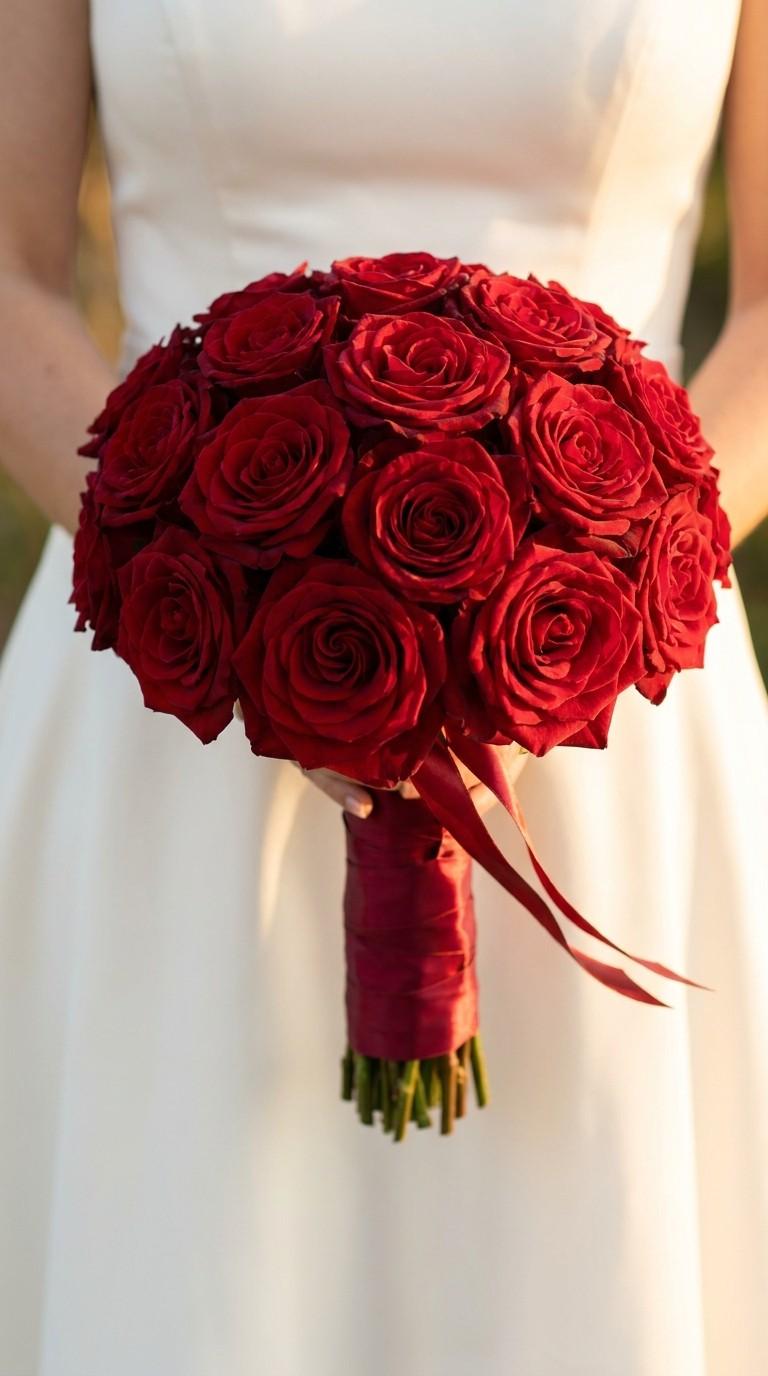
Red roses are the universal symbol of passionate love — and as a wedding bouquet, they make a genuinely powerful statement.
A tight, round bouquet of deep red roses is one of the most iconic and classic wedding choices. It’s bold, romantic, and completely timeless.
Shades of red to consider:
- Deep crimson (classic, formal, dramatic)
- Softer cherry red (more approachable and vibrant)
- Dark burgundy (sophisticated and autumnal)
- Coral-red (warmer, more romantic)
Best wedding styles: Traditional, formal, or classically romantic weddings. Red roses on an ivory gown is a striking combination.
Budget tip: Red roses are among the most widely available and affordable flowers at wholesale. A tight round bouquet can be made from 2–3 dozen roses purchased from a wholesale market for $30–$60.
Pairing tip: A classic red rose bouquet needs very little else. A simple red satin ribbon on the stems and nothing more is the perfect finishing touch.
Lavender and Herb Bouquet
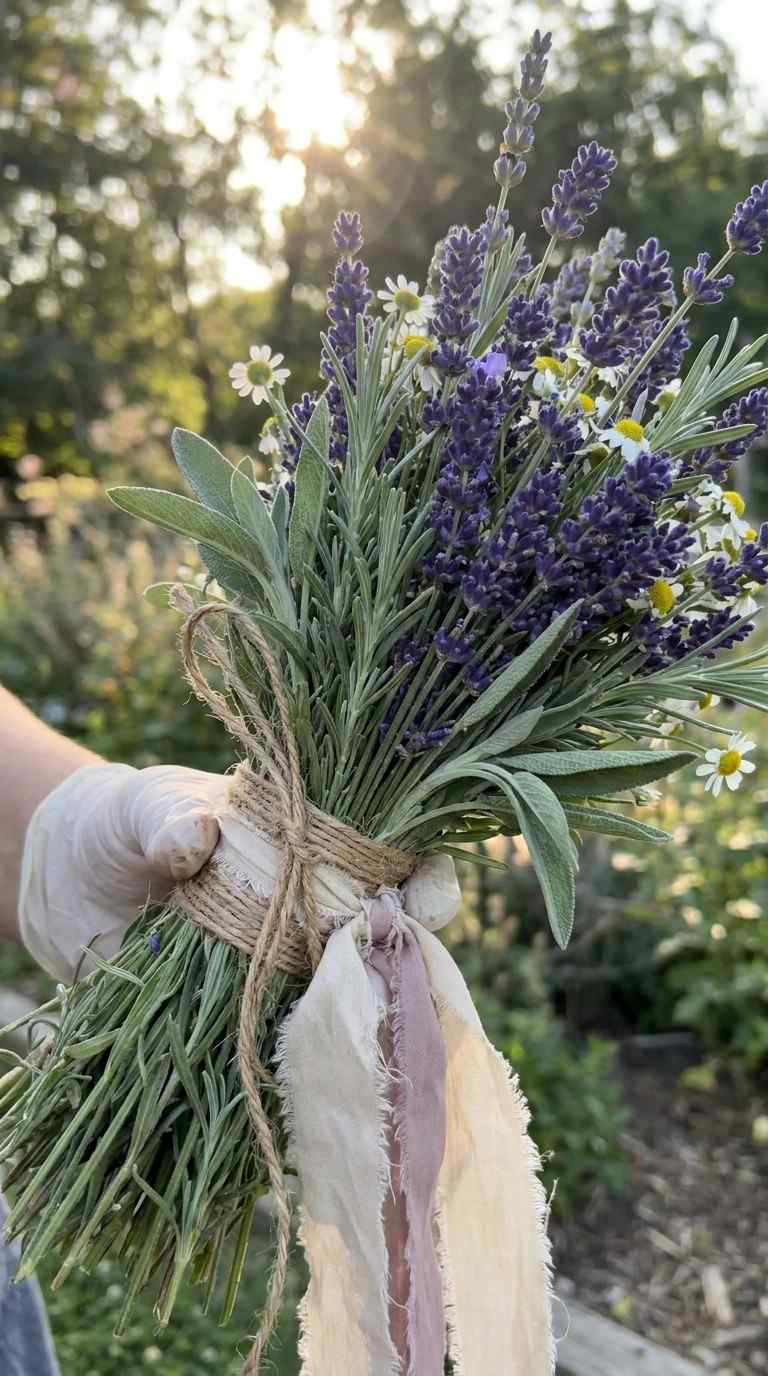
A lavender and herb bouquet engages not just sight but also smell.
The fragrance of fresh lavender, rosemary, and sage creates a sensory experience that flower-only bouquets can’t match. Walking down the aisle with an aromatic bouquet is a deeply memorable moment.
Herbs and plants that work beautifully:
- Lavender (the hero)
- Rosemary (fragrant and textural)
- Sage (silvery green leaves)
- Chamomile (tiny daisy-like flowers)
- Mint (fresh and bright)
- Thyme (tiny leaves, complex texture)
Budget tip: Many of these herbs can be grown at home or purchased inexpensively at a grocery store or farmers market for $3–$8 per bunch. A complete herb and lavender bouquet might cost $20–$50 DIY.
Best wedding styles: Rustic, farmhouse, Provençal/French countryside, garden party weddings.
Care note: Fresh herb bouquets wilt faster than flower bouquets in heat. Keep refrigerated until the ceremony and mist lightly with water beforehand.
Anemone Bouquet
Anemones are one of the most graphically striking flowers in wedding floristry.
Their large, bold petals in white (or purple, red, blue) surround a dramatic dark center. A bouquet of white anemones looks like a modern art piece — clean, contrasting, and completely unforgettable.
Anemone color options:
- White with black/dark purple centers (the most dramatic option)
- Deep purple or burgundy
- Soft pink
- Red
Best combinations:
- White anemones + eucalyptus (modern and clean)
- White anemones + white ranunculus (layered white textures)
- Purple anemones + greenery (bold and colorful)
Season: Anemones are in season from late fall through spring (October–April in the Northern Hemisphere).
Budget tip: Anemones are mid-range in price — less than garden roses or peonies, but more than carnations or daisies. A mixed anemone bouquet can be made for $60–$100 DIY.
Bohemian Mixed Bouquet
A bohemian bouquet celebrates abundance, texture, and the beauty of imperfection.
It’s not tight or round. It’s loose, layered, and full of unexpected elements — dried flowers next to fresh ones, architectural protea next to delicate small blooms.
Key elements of a boho bouquet:
- Protea (large, dramatic, architectural)
- Pampas grass or feathery dried grasses
- Eucalyptus and trailing greenery
- Dried lunaria or seed pods
- Loose, open roses or garden roses
- Small accent flowers (chamomile, feverfew, wildflowers)
Color palettes:
- Earthy neutral (cream, tan, rust, sage)
- Blush and mauve with greenery
- All neutral with dried elements
Budget tip: Because bohemian bouquets intentionally mix fresh and dried materials, you can use less fresh flowers (which are more expensive) and more dried elements (which are affordable). Total DIY cost: $50–$100.
Tying technique: Natural twine, raw cotton ribbon, or leather cord — all suit this aesthetic far better than satin.
Single Stem Bouquet
A single stem bouquet — one perfect, large bloom — is the most minimal and modern choice possible.
A single white calla lily. A single large sunflower. A single garden rose in deep burgundy. One stem, carried confidently, makes an incredibly strong visual statement.
Best single stem flowers:
- White calla lily (most popular — elegant and sculptural)
- King protea (dramatic and architectural)
- Single large garden rose
- Magnolia bloom
- Bird of paradise
Who it suits: Minimalist, modern, non-traditional brides who appreciate design over decoration.
Budget tip: Obviously, a single stem bouquet is the most budget-friendly option possible. A single premium white calla lily costs $3–$8 at most florists and grocery stores.
Photography note: Single stem bouquets look best in close-up shots that show the flower’s form and the gown’s detail together. In wide shots, they can disappear.
Succulent Accent Bouquet
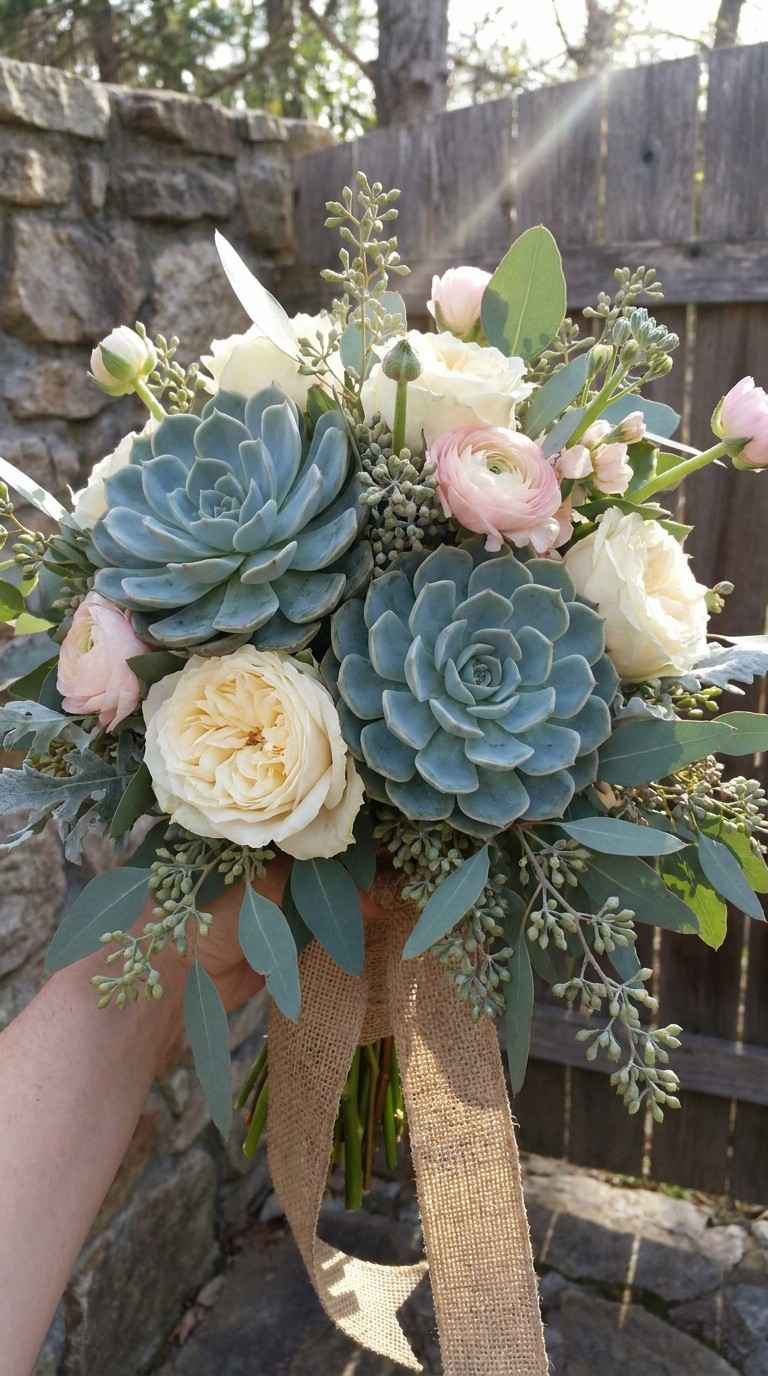
Adding succulents to a wedding bouquet creates a completely unique visual texture — fleshy, architectural, and surprisingly beautiful alongside traditional flowers.
Succulents range from tiny rosette shapes to large dramatic specimens. Blue-green, purple-tinged, and silvery varieties work especially well in wedding arrangements.
Succulent varieties for bouquets:
- Echeveria (the classic rosette-shaped succulent)
- Sedum (trailing, good for edges)
- Haworthia (architectural and dramatic)
Why succulents work:
- They add a sculptural quality that flowers alone can’t provide
- They’re very durable — they won’t wilt during a long wedding day
- Each succulent can be removed from the bouquet after the wedding and planted
Budget tip: Succulents can be purchased from garden centers, Home Depot, or Walmart for $3–$8 each. Adding 3–5 succulents to an otherwise simple flower bouquet creates a high-end look for very little extra cost.
DIY tip: Wire each succulent with floral wire before adding to the arrangement so it sits firmly in the bouquet.
Magnolia and Greenery Bouquet
Magnolia bouquets have a lush, Southern garden quality that no other flower can replicate.
The creamy white blooms are large and fragrant. The waxy dark green leaves provide a beautiful, glossy contrast.
Types of magnolia for bouquets:
- Saucer magnolia blooms (large, dramatic, spring only)
- Magnolia stellata (star-shaped, more delicate)
- Magnolia leaves alone (without blooms — deep, glossy, architectural)
Season: Fresh magnolia blooms are available in early spring. Outside this window, magnolia branches and leaves are available year-round from florists and wholesalers.
Budget tip: A few magnolia blooms combined with a large volume of magnolia leaves creates a bouquet that looks abundant and luxurious with fewer total flowers. Magnolia branches are sold at wholesale markets for $10–$20 per bunch.
Best wedding styles: Southern garden weddings, outdoor estate ceremonies, spring outdoor receptions.
Blue Thistle and Wildflower Bouquet
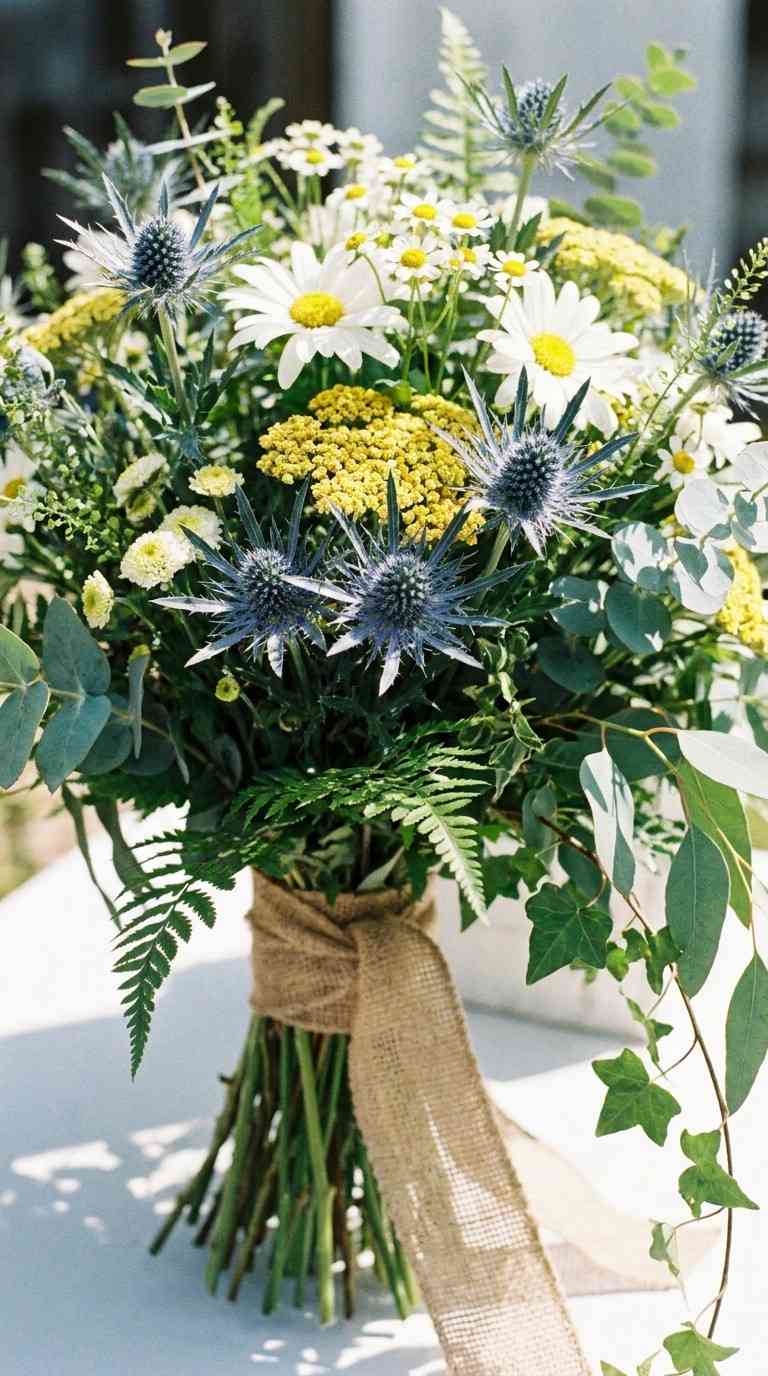
Blue thistle is one of the most underused wedding flowers — and one of the most striking.
Its spiky, steel-blue globes create a completely different texture from any other flower. Combined with soft white daisies, yellow yarrow, and trailing greenery, it creates a bouquet that feels genuinely handpicked from a Scottish hillside.
Why thistle works in bouquets:
- The blue tone adds cool contrast to warm flowers
- The spiky texture is unexpected and interesting
- It’s very durable and long-lasting
- It dries beautifully — your bouquet can become a permanent dried arrangement
Budget tip: Thistle is relatively inexpensive through wholesale flower markets — often $8–$15 for a bunch that contains 10+ stems. Combined with grocery store wildflowers and herbs, a full bouquet can cost under $40 DIY.
Best wedding styles: Scottish Highland, rustic, outdoor, woodland, or farmhouse wedding themes.
Garden Rose and Sweet Pea Bouquet
Garden roses and sweet peas together create the most romantic, lush, English-cottage feel of any bouquet combination.
Sweet peas trail naturally at the edges of the arrangement. Their delicate, ruffled petals in soft pink, lavender, and white add movement and fragrance. Paired with large, fully open garden roses, the result is a bouquet that looks like it came straight from a walled English garden.
Sweet pea varieties:
- Spencer sweet peas (large, fragrant, most popular)
- Baby Grandiflora sweet peas (smaller, more delicate)
Season: Sweet peas are only available in late spring and early summer. Plan accordingly — they’re worth scheduling around.
Budget tip: Sweet peas are delicate and short-lived, but very affordable wholesale. A bunch of sweet peas costs $8–$15 and adds enormous impact to an arrangement.
DIY note: Sweet peas need their stems re-cut and placed in water immediately after purchase. Keep refrigerated until the wedding day.
Orchid Bouquet
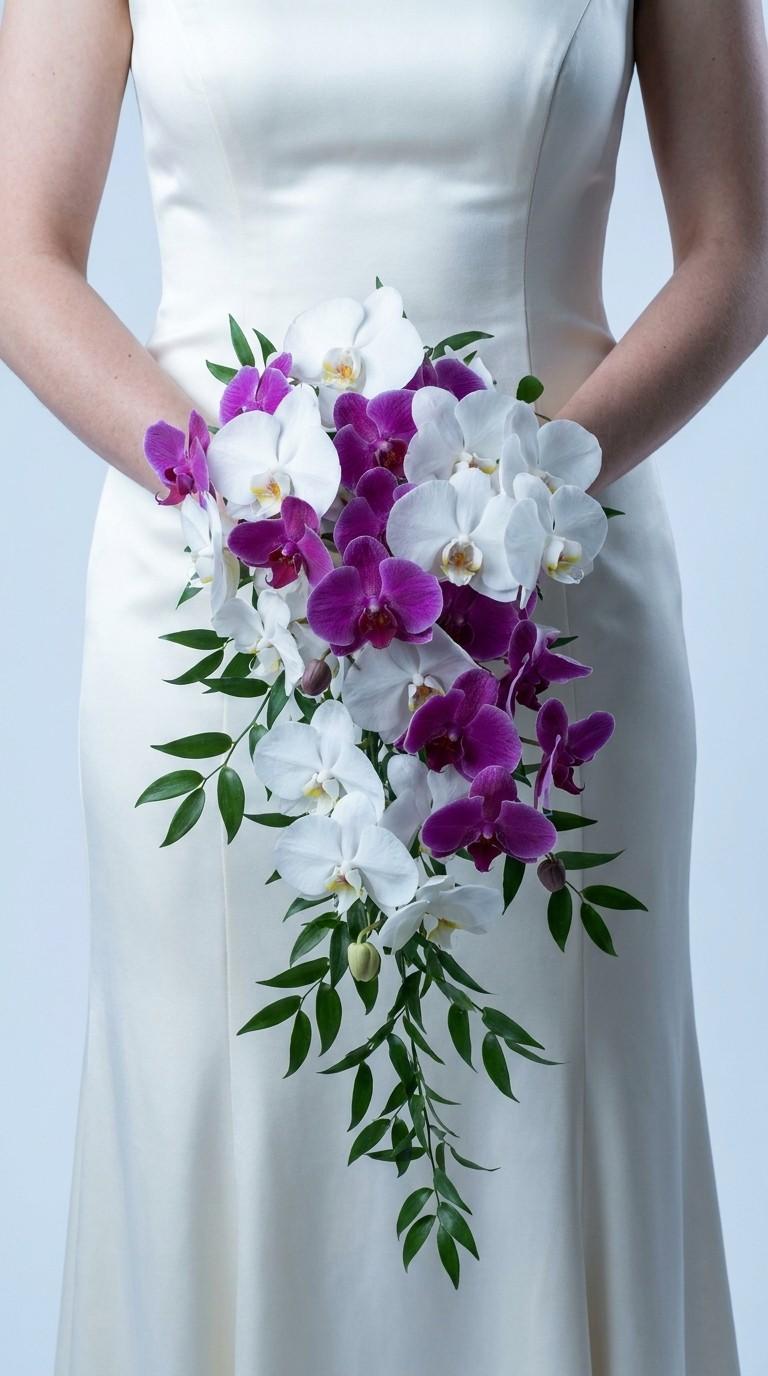
Orchids bring an exotic, refined elegance to wedding bouquets that few other flowers can match.
A bouquet of white phalaenopsis orchids is sleek and modern. A tropical bouquet with purple dendrobium orchids is bold and dramatic. The variety of orchid styles means there’s a type for almost every wedding aesthetic.
Orchid types for bouquets:
- Phalaenopsis (moth orchid) — most widely available, classic white or pink
- Dendrobium — long-stemmed, good for cascades and tropical arrangements
- Cymbidium — large, robust blooms, very formal
- Oncidium (dancing lady) — small, yellow, very airy and delicate
Budget tip: Orchids can be affordable when purchased in bulk. A string of 10+ phalaenopsis stems is available from wholesale suppliers for $15–$30. Grocery stores with floral departments also regularly carry affordable orchids.
Care note: Orchid bouquets need to be kept very cool and well-hydrated until the ceremony. Mist with water and keep stems in tubes of water if possible.
Lily of the Valley Bouquet
Lily of the valley is one of the most beloved — and rarest — wedding flowers.
The tiny, perfectly bell-shaped white blooms on delicate arching stems have an almost magical quality. They’ve been chosen by royal brides (including Princess Diana and Kate Middleton) for generations.
Why it’s special:
- The fragrance is extraordinary — sweet, fresh, and unmistakable
- The delicate, nodding flowers look like something from a fairytale
- A small bouquet makes more visual impact than you’d expect from such tiny flowers
Important: Lily of the valley is toxic — keep away from pets and children. Wear gloves when handling in quantity.
Season: Available from late April through May. Very limited availability outside this window, and very expensive when out of season.
Budget tip: Because lily of the valley is a premium specialty flower, it’s expensive. A small boutique-sized bouquet can cost $100–$200 through a florist. Pairing a modest amount of lily of the valley with white sweet peas achieves a similar delicate effect at lower cost.
Paper Flower Bouquet
A paper flower bouquet is completely handmade — and it lasts forever.
It’s not just a budget option. It’s a statement. A paper bouquet shows intentionality, creativity, and the willingness to make something truly one-of-a-kind.
Why couples choose paper bouquets:
- It lasts forever — no wilting, no decay, no lost beauty
- It can be made exactly to specification (colors, scale, flower types)
- It’s a meaningful keepsake that never needs to be pressed or preserved
- It can be significantly less expensive than fresh flowers
Paper types that work:
- Crepe paper (the most lifelike option — stretchable and petal-like)
- Coffee filter paper (soft and translucent when dyed)
- Book page paper (literary and vintage)
- Tissue paper (delicate and light)
Budget tip: A complete DIY paper flower bouquet can be made for $20–$50 in materials. Crepe paper is available at craft stores for $3–$5 per roll.
Online tutorials: YouTube has extensive tutorials for crepe paper roses, peonies, and anemones. With one afternoon of practice, most people can create stunning results.
Burgundy and Blush Bouquet
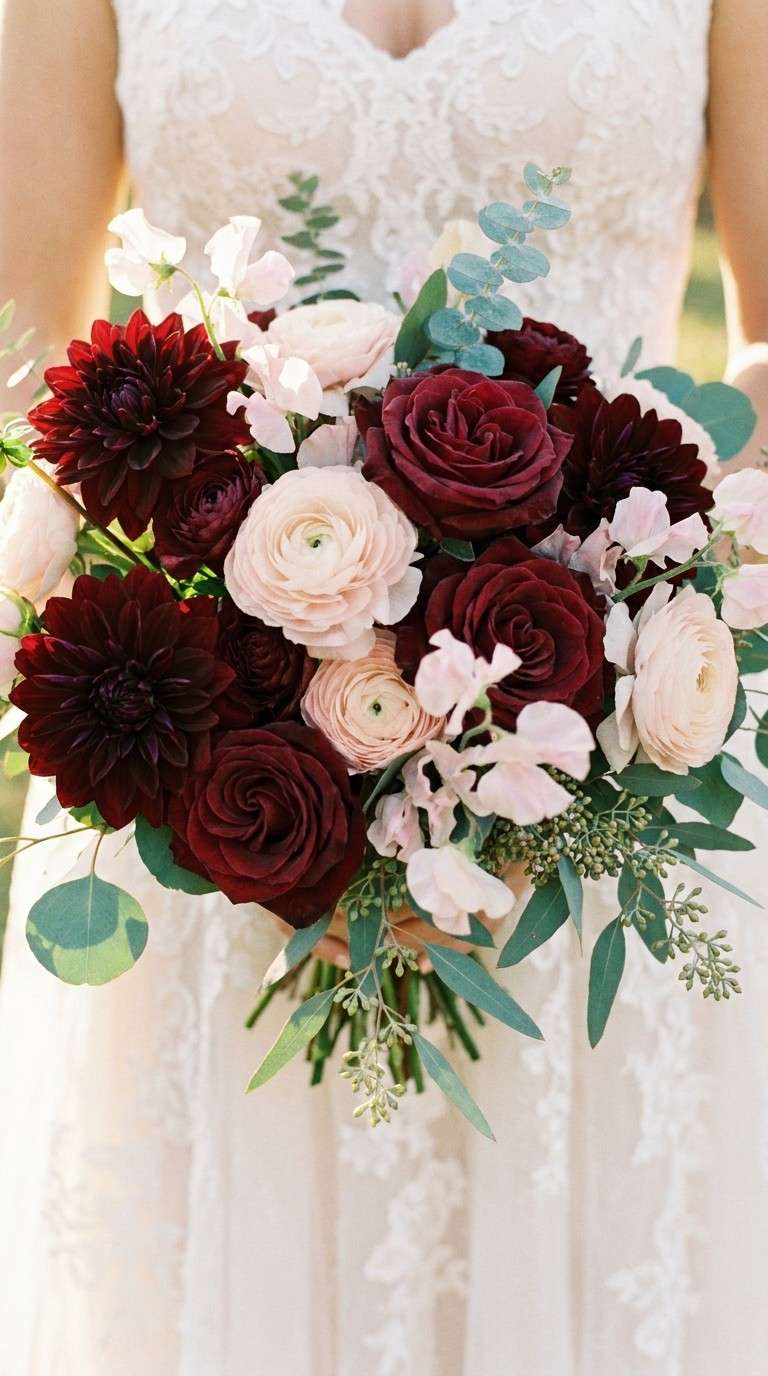
Burgundy and blush is one of the most enduringly popular wedding color combinations — and it translates into a stunning bouquet palette.
The deep, rich burgundy flowers provide drama and weight. The soft blush flowers bring romance and softness. Together, they create a bouquet with incredible color depth.
Flowers that achieve this palette:
- Deep burgundy dahlias or chocolate cosmos
- Marsala or dark red roses
- Blush ranunculus or blush peonies
- Pale pink sweet peas or garden roses
- Dusty miller (silvery green foliage — bridges the tones beautifully)
Budget tip: Burgundy dahlias are available September–October and tend to be very affordable in season. Blush spray roses (smaller than standard roses) are affordable year-round.
Best wedding season: Fall — when burgundy tones are at their most natural and beautiful in the surrounding landscape.
Cascading Tropical Leaves Bouquet
Large tropical foliage — monstera leaves, banana leaf, palm fronds — creates the most graphic and dramatic bouquet without requiring expensive flowers.
The bold, architectural forms of tropical leaves photograph with a completely different energy from flower arrangements. It’s modern, editorial, and completely unexpected at a wedding.
Tropical leaves for bouquets:
- Monstera deliciosa (the split leaf — most recognizable)
- Banana leaf
- Palm frond
- Traveler’s palm
- Large bird-of-paradise leaves
Budget tip: Tropical leaves are very inexpensive to source from wholesale markets or directly from tropical plant nurseries. A dramatic foliage bouquet can be assembled for $20–$50.
Best wedding styles: Tropical destination weddings, botanical garden venues, modern art-inspired ceremonies.
Thistle and Heather Scottish Bouquet
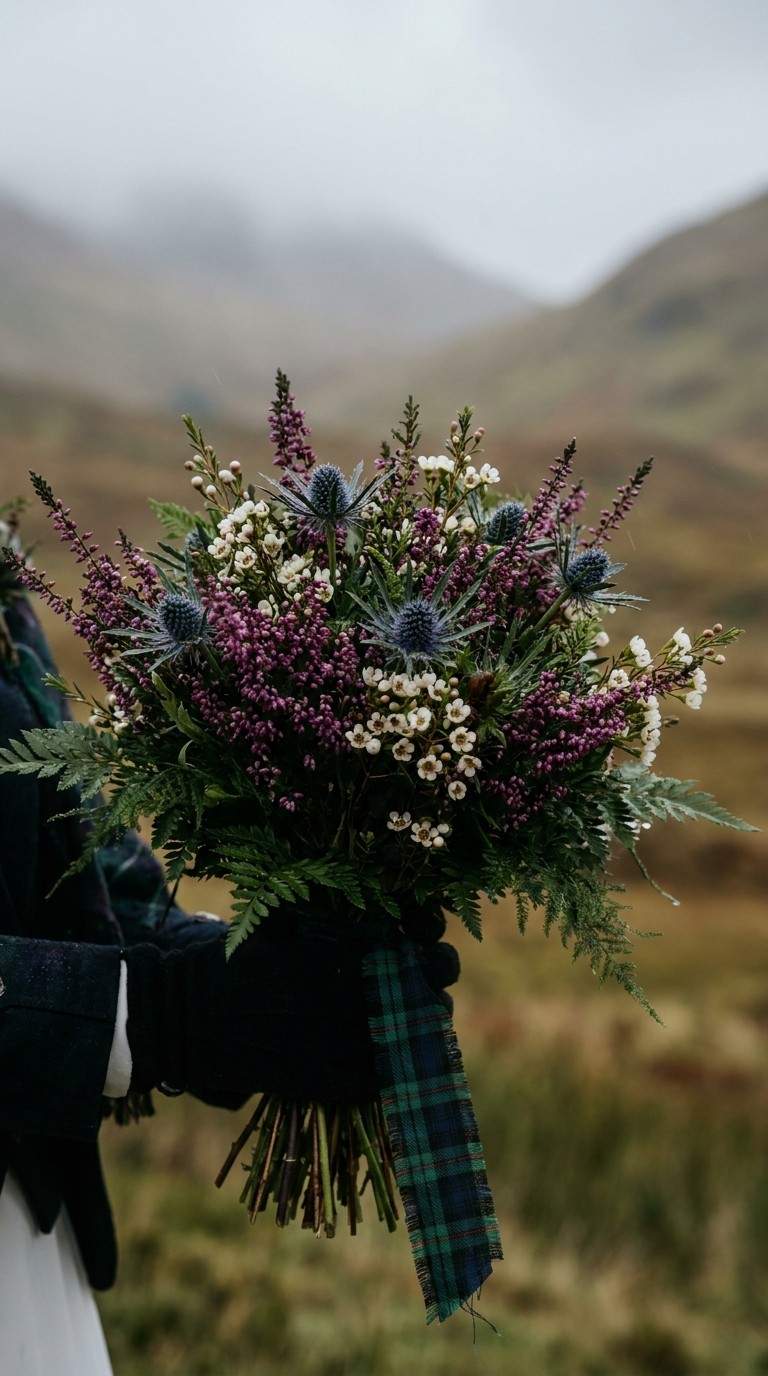
For a Scottish or Celtic-inspired wedding, a bouquet of heather and thistle is both traditional and deeply meaningful.
Heather is Scotland’s national flower and symbolizes good luck. Thistle is Scotland’s national emblem.
Elements of a Scottish bouquet:
- Purple heather (in season late summer/early fall)
- Blue or purple thistle
- Small white flowers (snowdrops, baby’s breath)
- Greenery and herbs (rosemary, sage)
- Tartan ribbon in your family colors
Budget tip: Heather and thistle are both inexpensive through Scottish suppliers and some online wholesale florists. A full Scottish-themed bouquet can be assembled for $30–$70.
Seasonal note: Fresh heather is at its peak in August and September. Outside this window, dried heather (still beautiful) is available year-round.
Best pairing: A simple white or ivory gown lets the purple and blue of the heather and thistle dominate visually.
Monochromatic Blush Pink Bouquet
An all-blush bouquet — made from flowers in every shade of pink from the palest ice pink to soft dusty rose — is one of the most photographed wedding styles.
The variety of tones within one color family creates depth and visual interest without the distraction of multiple colors.
Flowers for a blush palette:
- Blush peonies or garden roses (anchor flowers)
- Blush ranunculus
- Pale pink sweet peas or lisianthus
- Dusty pink spray roses
- Blush-toned dried flowers for texture
Budget tip: Mix expensive anchor flowers (peonies or garden roses) with affordable filler flowers in the same palette (spray roses, sweet peas, baby’s breath dyed blush) to create a luxurious-looking bouquet at a lower total cost.
Ribbon choice: Ivory or cream ribbon completes the palette. A dark green or sage ribbon adds beautiful contrast.
Lily and Eucalyptus Bouquet
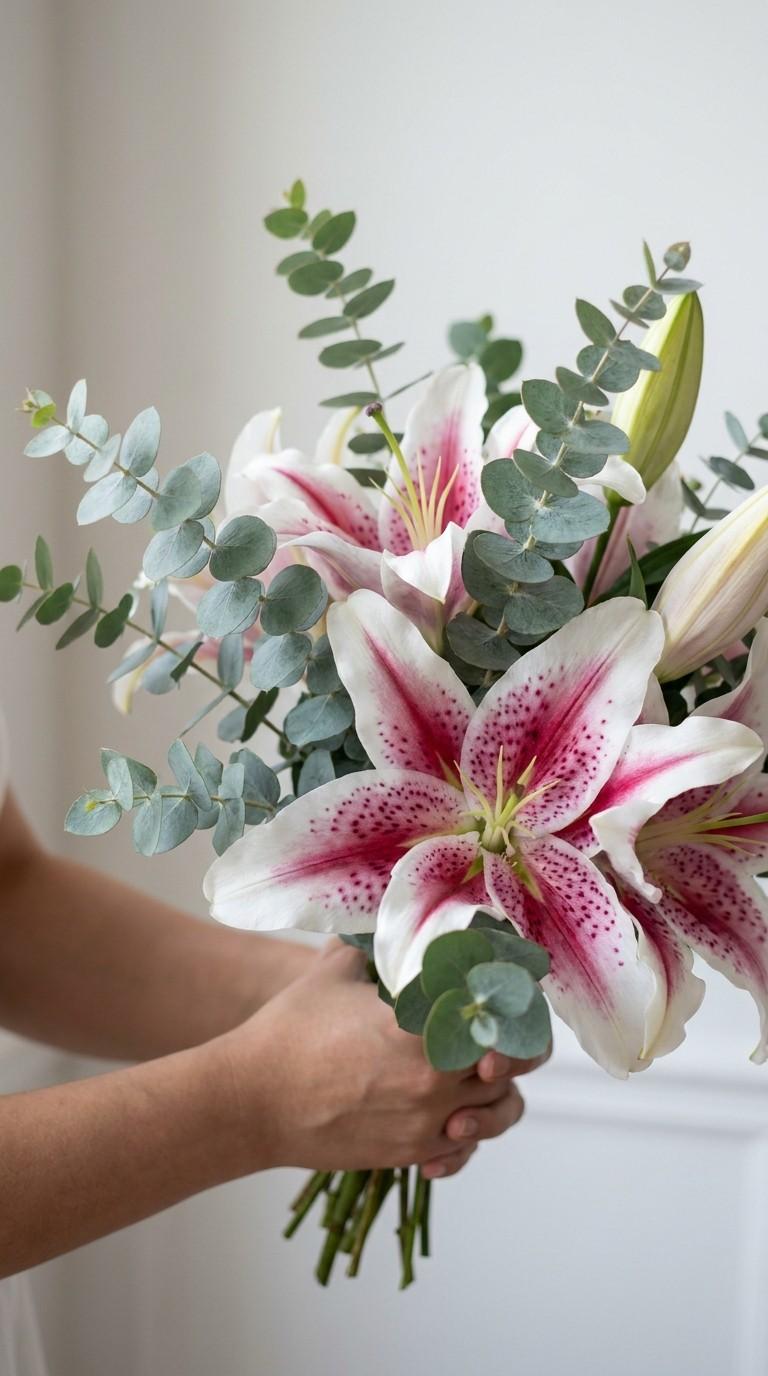
White lilies — stargazer, calla, or Casablanca — combined with eucalyptus create one of the most fragrant and photographically clean bouquets possible.
The bold, open lily blooms create focal points. The eucalyptus fills the space with silvery green texture and an incredible natural fragrance.
Lily types for bouquets:
- Casablanca lily (large, pure white, very fragrant)
- Stargazer lily (white with pink-crimson markings, dramatic)
- Asiatic lily (smaller, available in many colors)
- Calla lily (trumpet-shaped, very modern)
Important note: Lily pollen stains fabric badly. Have the yellow pollen stamens removed before the bouquet is made up. This is standard practice — just confirm with your florist.
Budget tip: Lilies are relatively affordable flowers — especially Asiatic and calla lilies. Combined with eucalyptus (very affordable wholesale), a full lily and eucalyptus bouquet can be made DIY for $40–$80.
Wedding Bouquet with Feathers
Feathers in a wedding bouquet are bold, theatrical, and — for the right couple — absolutely perfect.
White ostrich feathers add incredible volume and movement. They’re lightweight and sway beautifully as you walk.
Feather bouquet styles:
- Large ostrich plumes surrounding a central arrangement of flowers
- Small feather accents tucked between flower stems
- Full feather bouquet with minimal flowers (very avant-garde)
Who it suits: Brides who love glamour, theatricality, and Old Hollywood or Art Deco aesthetics. This is not a subtle choice — and that’s the point.
Budget tip: White ostrich feathers are available from craft stores and online retailers for $10–$25 for a bundle that provides multiple bouquet stems. Combined with affordable white roses, a full feather bouquet can be made for $60–$120 DIY.
Practical note: Feathers can be damaged by rain or significant humidity. Keep the bouquet protected until the ceremony.
Autumn Harvest Bouquet
An autumn harvest bouquet captures the richest color palette in nature.
Deep oranges, burgundies, rusts, and earthy tones — combined with dried grasses, berries, and foliage — create an arrangement that feels entirely seasonal and deeply beautiful.
Flowers for an autumn harvest palette:
- Orange and rust dahlias
- Deep burgundy roses or peonies
- Chrysanthemums in copper and amber
- Dried wheat stalks
- Hypericum berries (red or orange)
- Copper beech leaves
Season: September through November is peak season for this palette — most of these flowers and foliage elements are at their most abundant and affordable.
Budget tip: Autumn flowers — dahlias, chrysanthemums, berries — are among the most affordable flowers at their peak season. A rich full harvest bouquet can be assembled DIY for $50–$100.
Minimalist Single Color Bouquet
A tight round bunch of a single flower type — all white tulips, all lavender, all sunflowers — makes a bold statement through simplicity.
There’s no complexity. No mixing. No arranging. Just one beautiful flower, repeated.
Single-flower bouquet options:
- White tulips (clean, modern, spring)
- Garden roses (one type, tightly bunched)
- Peonies (one variety, full and luxurious)
- Lavender (fragrant, Provençal)
- Sunflowers (bold, cheerful, summer)
Budget tip: Buying a large quantity of one affordable flower — tulips, lavender, even carnations — creates a dramatically more budget-friendly bouquet than mixing multiple expensive types.
DIY note: Single-flower bouquets are the easiest to assemble yourself. Simply gather the stems, spiral slightly, tie tightly with ribbon or twine.
Photography: Single-flower bouquets photograph with a graphic, editorial quality that complex arrangements sometimes lack.
Protea and Native Australian Bouquet
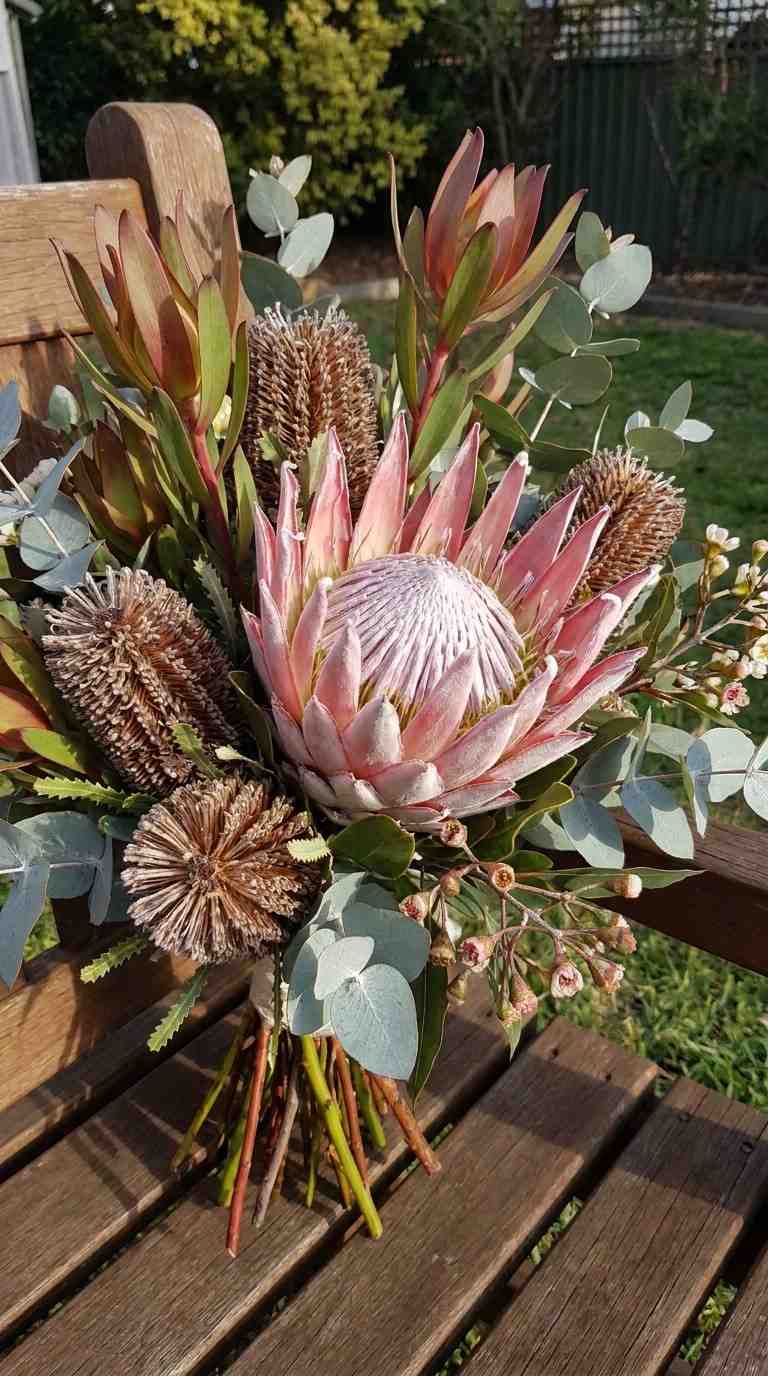
Protea — particularly the magnificent King Protea — has become one of the most sought-after wedding flowers globally.
Its large, architectural bloom and extraordinary range of varieties (from golf ball-sized to dinner plate-sized) create arrangements that look like they belong in a gallery.
Protea varieties for bouquets:
- King protea (large, dramatic, iconic)
- Pincushion protea (bright, spiky, colorful)
- Leucadendron (foliage and pods — incredible texture)
- Banksia (dramatic, textural, architectural)
Why protea works:
- It’s extremely long-lasting — it won’t wilt through a long wedding day
- Each bloom is unique in size and petal arrangement
- It dries beautifully and maintains its shape after the wedding
Budget tip: Protea can be expensive when sourced through florists. Buy directly from wholesale South African flower importers or specialty floral wholesalers. Online bulk orders of protea stems can be significantly more affordable.
Conclusion
Your wedding bouquet is not a prop — it’s a meaningful part of your day. It’s in your hands during every important moment, and it will be in most of the photographs you look at for the rest of your life.
The best bouquet is one that genuinely reflects who you are.
If you love wildflowers, don’t order a structured formal arrangement to seem more traditional. If you prefer a single perfect calla lily over a mass of flowers, honor that preference. The most beautiful bouquets are always the ones that feel true to the person holding them.
Budget matters — and this guide has shown that stunning bouquets are achievable at almost any price point. A DIY wildflower bouquet from a farmers market can be just as beautiful as a florist-arranged luxury arrangement. What matters is the intention behind it.
Start planning early. Order flowers 3–4 weeks in advance if purchasing from online wholesalers. Practice arranging at least once before the wedding if you’re going DIY.
And remember: the bouquet is background to the love story. It frames the moment. Pick something beautiful, something real, and something yours — and it will be perfect.