Wedding invitations do more than announce a date. They set the tone for the entire celebration. Guests begin forming expectations the moment they open the envelope. The design, wording, timing, and even the envelope all communicate something about the event.
Many couples focus on colors and fonts but overlook etiquette. Small mistakes can confuse guests, delay RSVPs, or create awkward situations. Luckily, good invitation manners are simple once you know the basics.
The best part? Following etiquette does not mean spending more money. Many thoughtful touches are easy DIY projects. Simple planning also helps prevent expensive reprints and mailing problems.
The guide below walks through 21 wedding invitation etiquette rules that help invitations look thoughtful, organized, and welcoming. Each tip focuses on simple actions any couple can handle—even on a tight budget.
Send Invitations 6–8 Weeks Before the Wedding
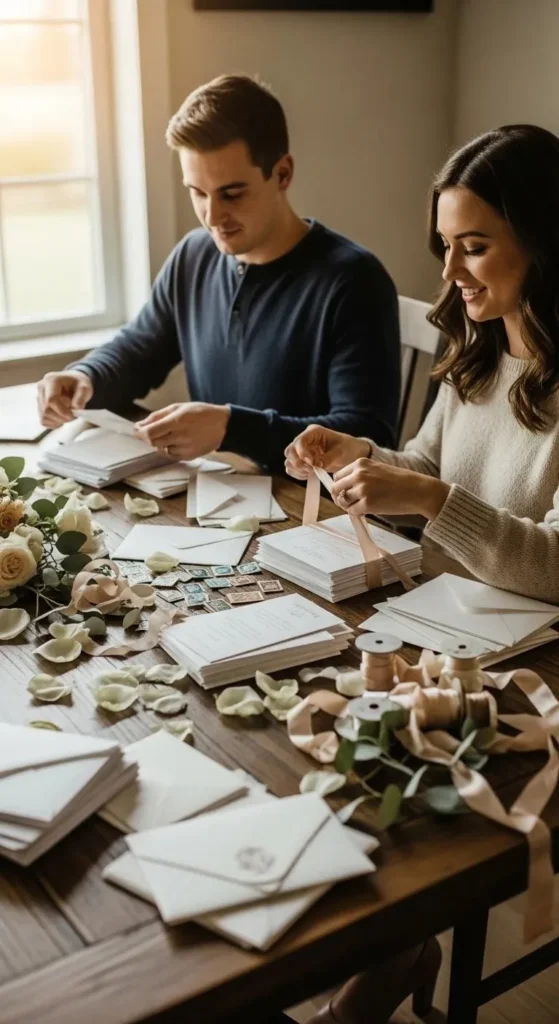
Timing affects everything. Invitations sent too late create stress for guests. Travel plans become rushed. Some people may not attend simply because they did not receive enough notice.
A safe window is six to eight weeks before the wedding. This gives guests time to request days off work, arrange childcare, and book hotels.
Destination weddings require more notice. Send those invitations three months ahead.
If you want an even earlier alert, send Save the Date cards around six to eight months before the event.
Trying to save money? Print invitations at home and mail them in batches. This spreads out postage costs.
Another tip: prepare envelopes early. Address them over a few evenings rather than finishing everything in one exhausting night.
Planning ahead keeps mailing calm and organized. Guests appreciate that thoughtful timing.
Use Full Names Instead of Nicknames
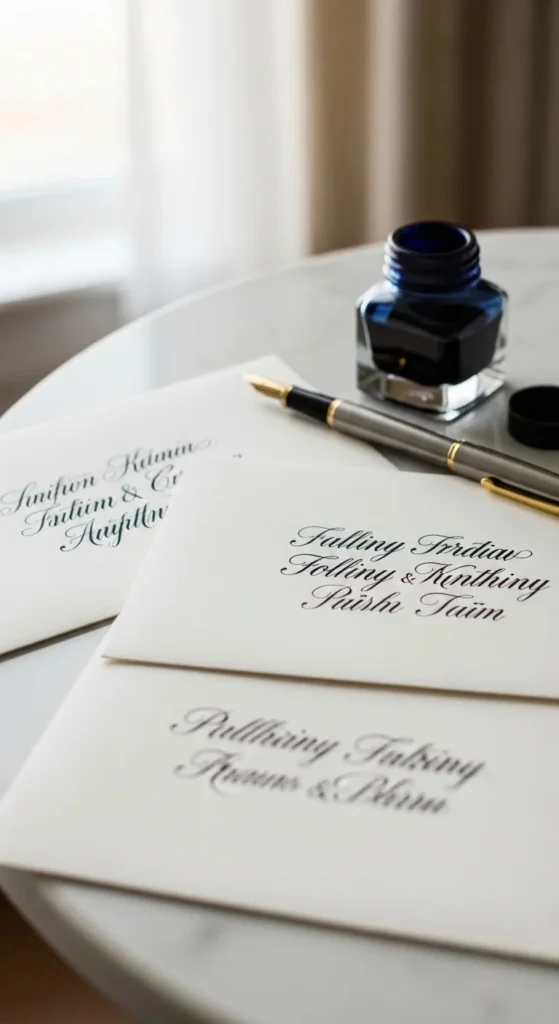
Wedding invitations carry a formal tone. Using full names helps maintain that tradition.
Instead of writing “Sam and Jess,” write Samuel Parker and Jessica Khan.
Older relatives often expect this style. It also looks cleaner on printed invitations.
If your event is casual, you can soften the format later inside the invitation wording.
DIY couples can practice calligraphy using online templates. Even simple neat handwriting works well.
A helpful trick: write names lightly in pencil first. Trace them with pen once the spacing looks right.
This avoids wasting envelopes.
Formal names also prevent confusion when families share similar nicknames.
It’s a small detail that adds polish to the invitation.
Double-Check Every Spelling
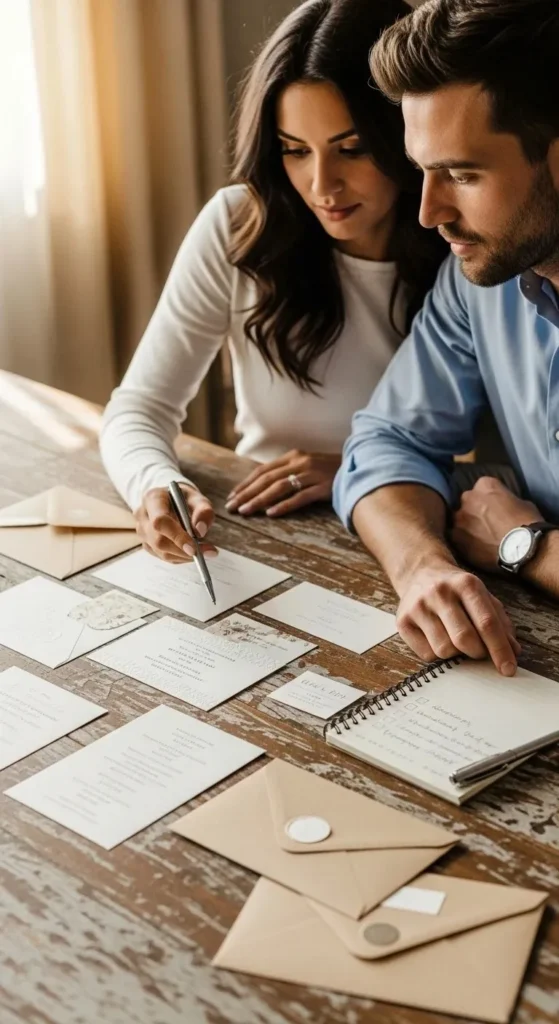
Spelling errors cause headaches. Once invitations are printed and mailed, fixing mistakes becomes expensive.
Before printing, review everything slowly.
Check:
- Names
- Venue
- Address
- Date
- RSVP contact
Ask a friend or family member to proofread. A fresh pair of eyes catches things quickly.
Many couples overlook the venue address. A missing suite number can confuse guests using GPS.
Print one test copy first. Seeing the design on paper often reveals errors missed on screen.
Budget tip: if printing at home, use inexpensive paper for test prints.
Accuracy prevents costly reprints.
Guests also appreciate clear, correct details.
Include an RSVP Deadline
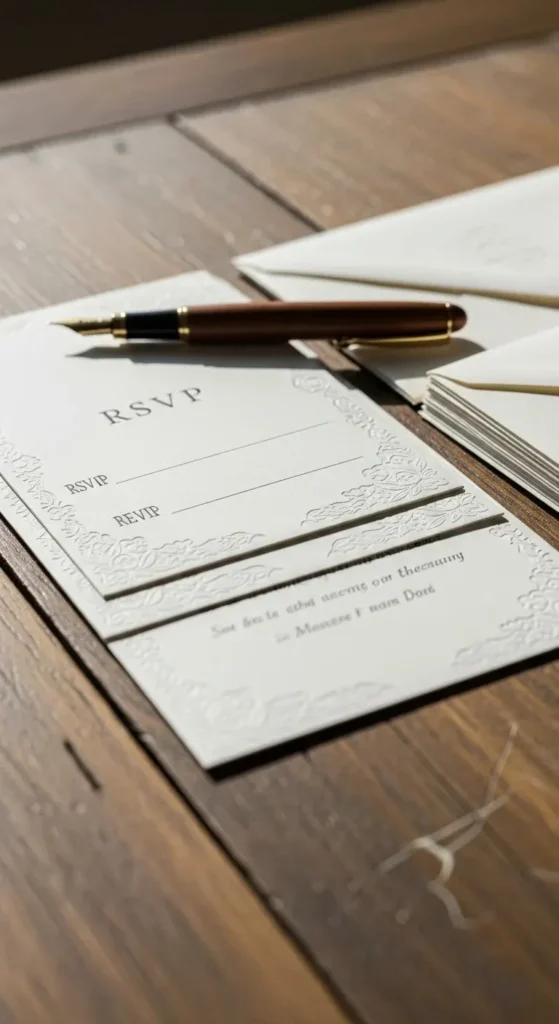
RSVP cards help finalize guest counts. Without a deadline, many people forget to reply.
Add a clear response date about three weeks before the wedding.
This gives enough time to confirm catering numbers and seating charts.
You can include a stamped return envelope to make responses easy.
Trying to save money? Use online RSVPs through a wedding website.
Many free platforms track responses automatically.
Some couples also add a fun RSVP question. For example, ask guests to suggest a dance song.
This keeps the process playful.
Clear deadlines prevent last-minute stress.
Always Include a Return Address
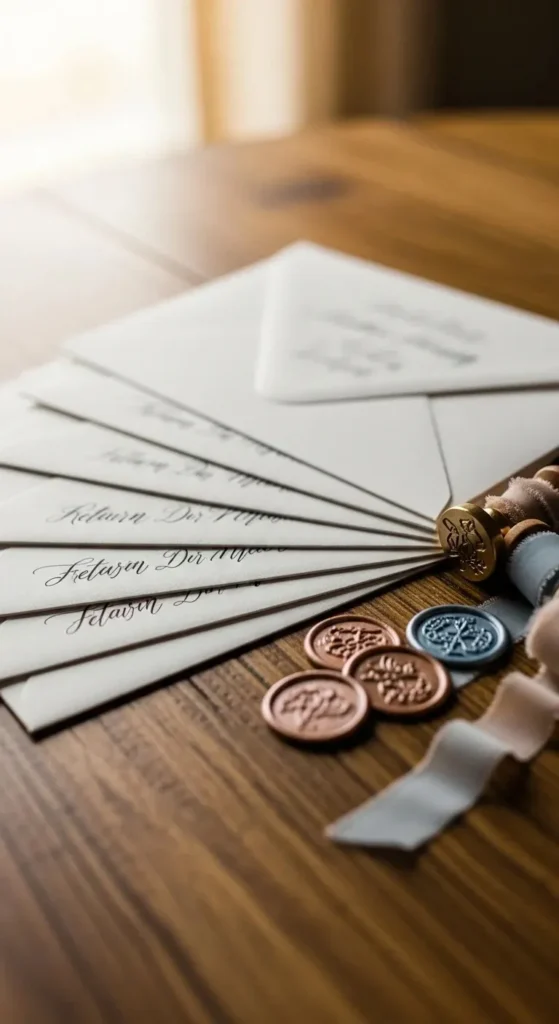
Mail sometimes fails to reach its destination. When that happens, the post office sends the envelope back.
Without a return address, lost invitations disappear completely.
Add the return address on the back flap of the envelope.
Many couples print custom return address stamps. They are inexpensive and reusable.
DIY couples can also write the address by hand for a personal feel.
Another tip: keep the return address consistent on RSVP envelopes too.
This keeps everything organized when replies arrive.
A simple step prevents confusion and lost invitations.
Avoid Writing Guest Names on the Inside Card
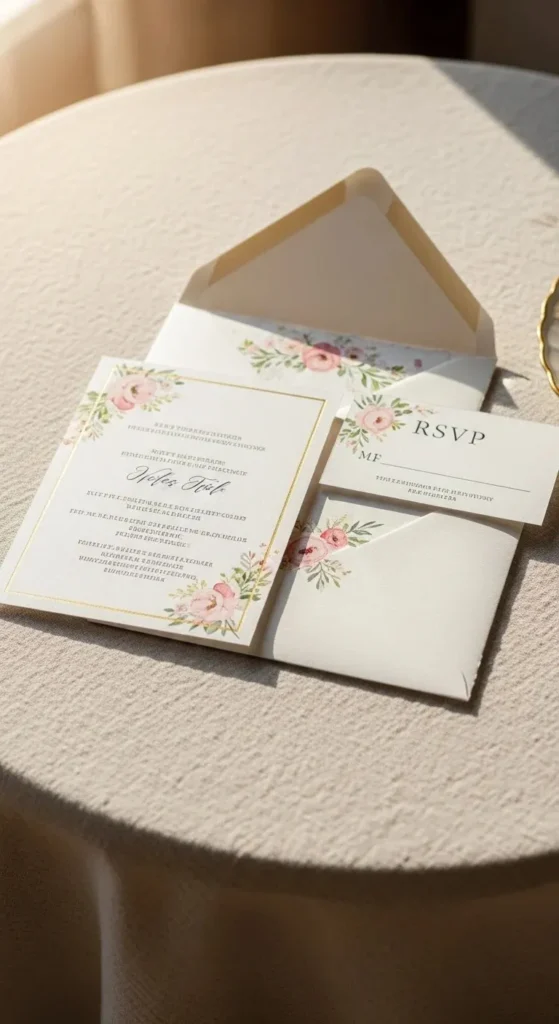
The inner invitation should stay clean.
Guest names belong on the outer envelope, not inside the invitation.
This tradition keeps the invitation design uncluttered.
It also makes printing easier if invitations are produced in large batches.
If you want to clarify who is invited, use the envelope format.
For example:
Parents with children
or
Adults only
You can also include a small details card for extra information.
Keeping the main card simple improves readability.
It also looks more refined.
Clearly State the Wedding Date and Time
Guests plan travel and schedules around the event time.
Write the full date and start time clearly.
Example style:
Saturday, the fifteenth of June
at four o’clock in the afternoon
Traditional wording spells out numbers. Casual weddings can use numeric format.
Avoid vague phrases like “evening ceremony.” Guests may arrive at different times.
If your ceremony begins at 4 PM, consider listing 4:30 PM on the invitation. This gives guests extra arrival time.
Clarity prevents confusion and late arrivals.
Mention the Dress Code If One Exists
Guests appreciate guidance about attire.
A small note about the dress code removes uncertainty.
Examples include:
- Formal
- Cocktail attire
- Garden party
Place this detail on a separate information card.
This keeps the invitation uncluttered.
Budget weddings can skip formal wording and simply write a friendly line such as:
“Dress comfortably for an outdoor celebration.”
Clear guidance helps guests feel relaxed and prepared.
Avoid Registry Details on the Invitation
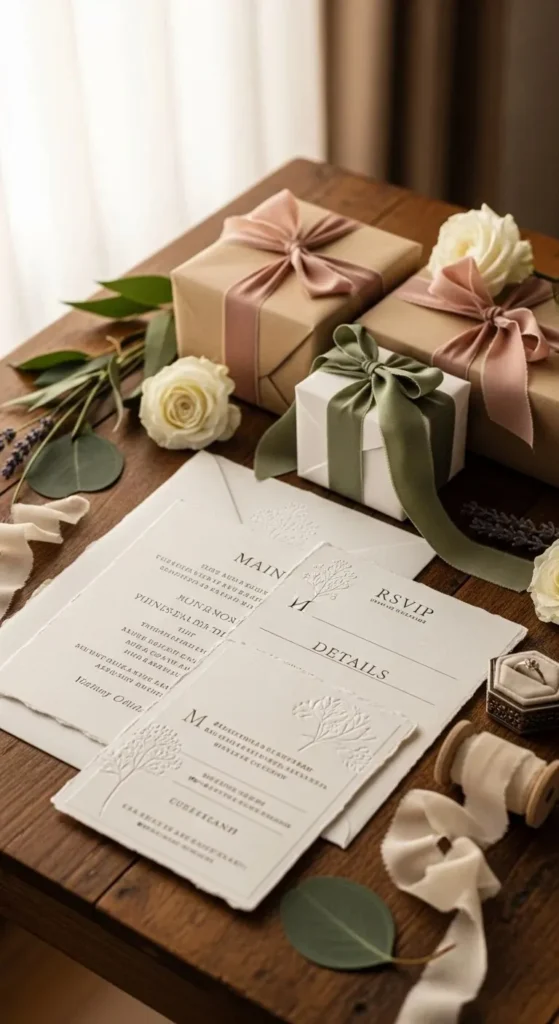
Gift registry information should not appear directly on the invitation.
Traditionally, invitations focus only on the event.
Registry details can be shared through:
- Wedding websites
- Word of mouth
- Bridal shower invitations
Many couples include a small website card inside the invitation envelope.
Guests can visit the site for registry links and event updates.
This approach keeps the invitation elegant.
It also avoids the impression of requesting gifts.
Use Matching Stationery Pieces
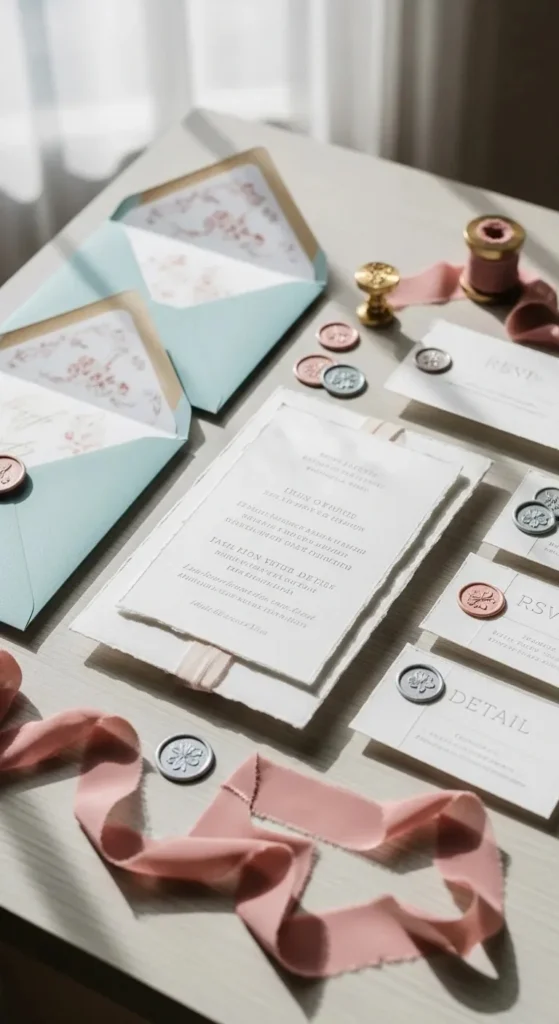
Matching stationery creates visual harmony.
You do not need expensive custom sets.
Choose one color palette and repeat it across:
- Invitations
- RSVP cards
- Envelopes
DIY couples can buy printable templates online for a few dollars.
Print everything using the same paper type.
Even simple designs look polished when colors and fonts match.
Consistency makes the entire suite feel intentional.
Guests notice the effort.
Address Married Couples Properly
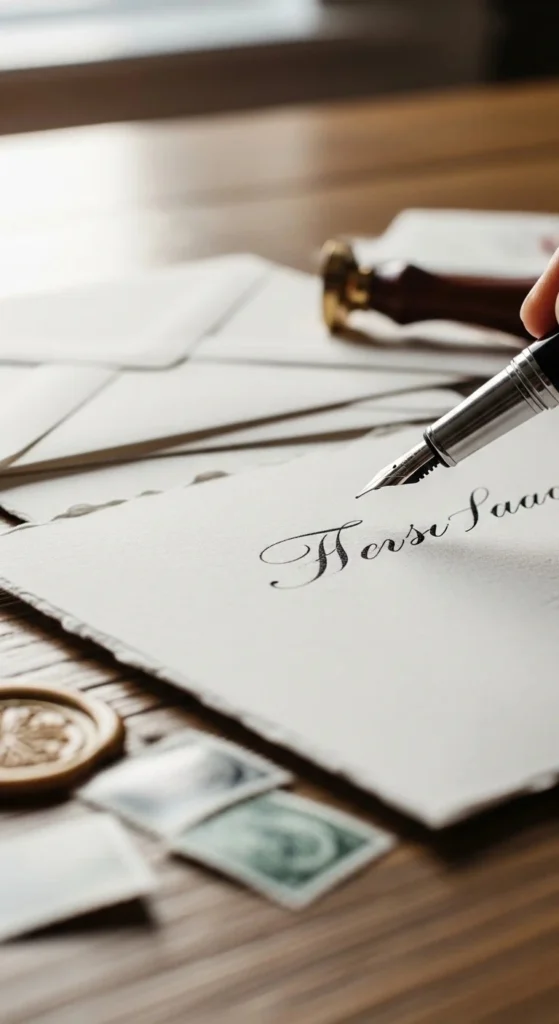
Traditional etiquette lists married couples together.
Example format:
Mr. and Mrs. Ahmed Khan
If both partners use different surnames, list both names.
Example:
Ms. Sara Malik
and Mr. Ali Khan
Take a few minutes to confirm correct titles.
Guests appreciate accurate addressing.
Be Clear About Plus-Ones
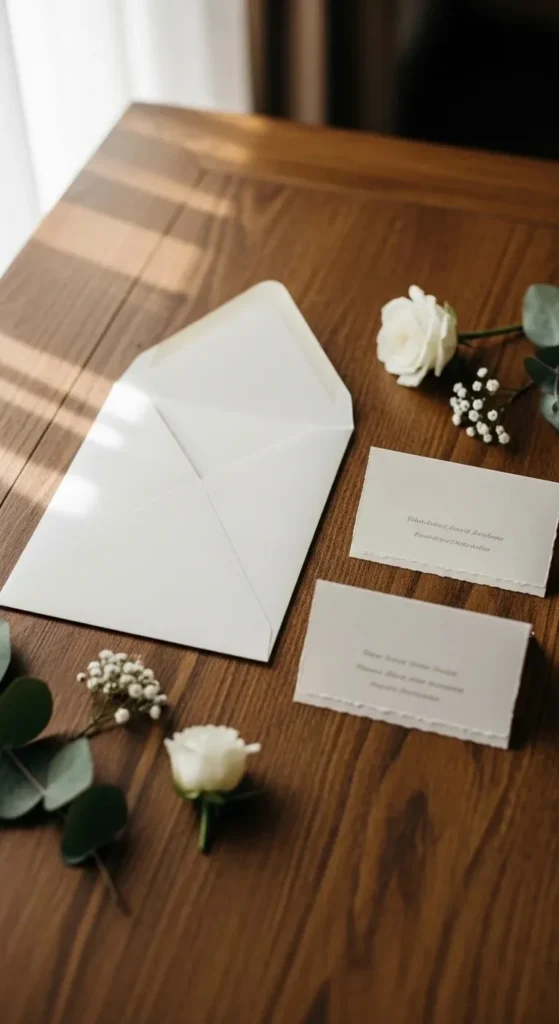
Plus-one confusion causes awkward conversations.
If someone is invited with a guest, write both names on the envelope.
Example:
Maria Lopez and Guest
If no plus-one is listed, the invitation applies only to the named guest.
Another option is using the RSVP card to show seat numbers.
Clear communication prevents misunderstandings.
Handwrite Addresses When Possible
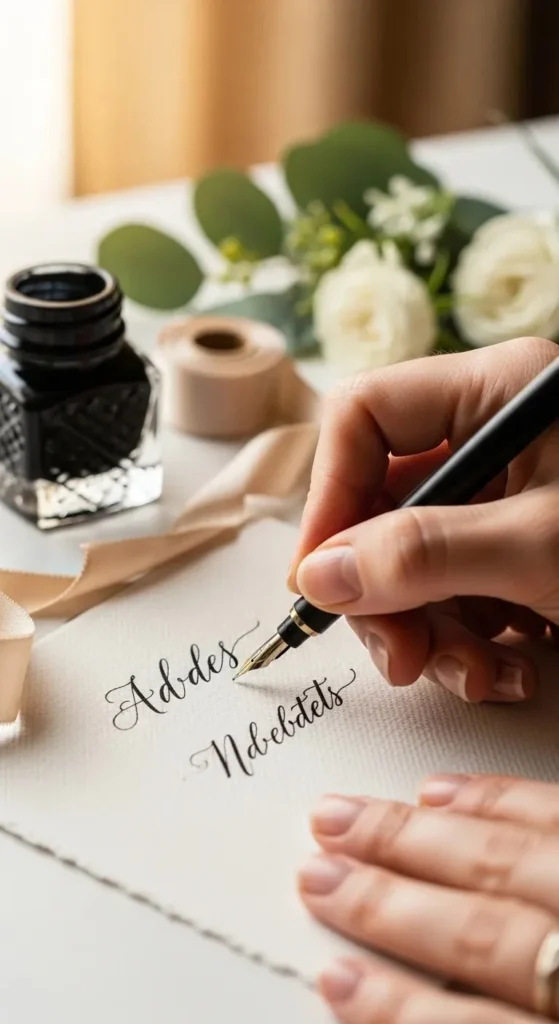
Handwritten envelopes feel personal.
Guests often keep beautiful envelopes as keepsakes.
If handwriting dozens feels overwhelming, invite friends for an address writing night.
Provide snacks and music. The task becomes fun instead of tiring.
Calligraphy pens are inexpensive and add charm.
Even neat block letters work well.
The personal touch stands out.
Send Save-the-Dates for Destination Weddings
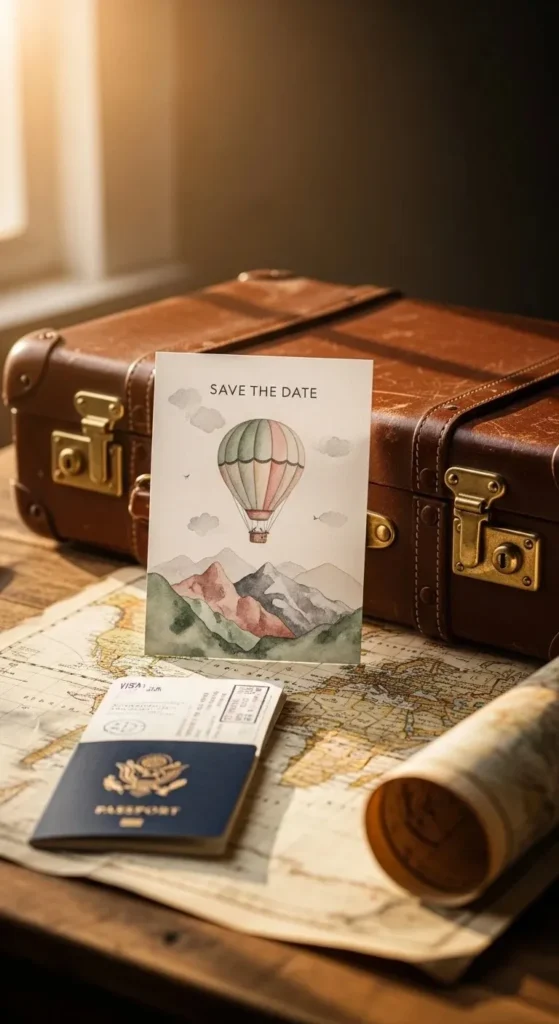
Destination weddings require extra planning.
Guests may need flights and hotel reservations.
Send Save the Date cards six to eight months ahead.
These cards only include the date and location.
Formal invitations arrive later.
DIY tip: digital Save the Dates cost nothing to send.
Guests appreciate the early notice.
Include a Map or Directions Card
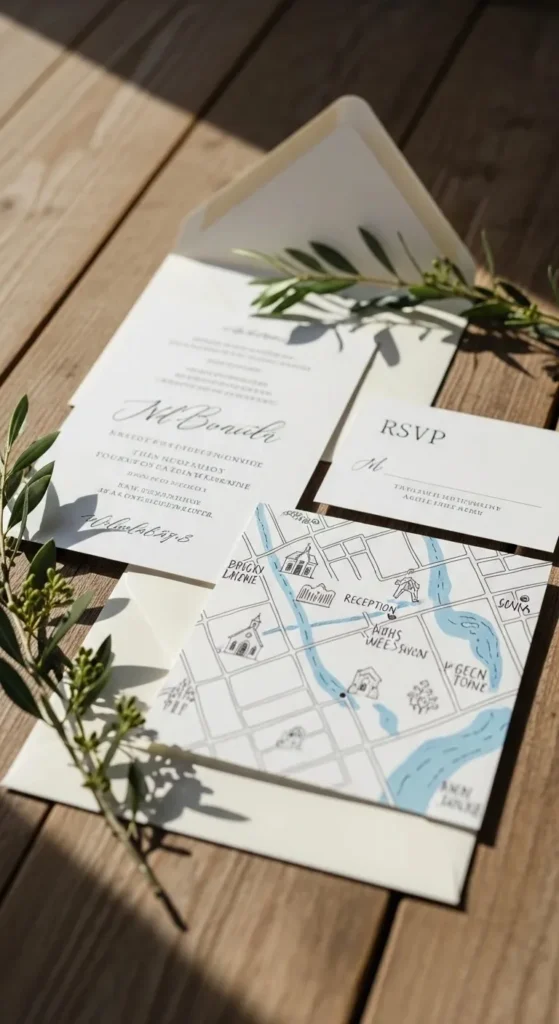
Venues can be tricky to locate.
A small directions card helps guests reach the ceremony smoothly.
This is especially helpful for countryside venues or estates.
Budget option: print a simple map from an online map service.
Keep the layout clean and easy to follow.
Clarity reduces late arrivals.
Keep Invitation Wording Simple
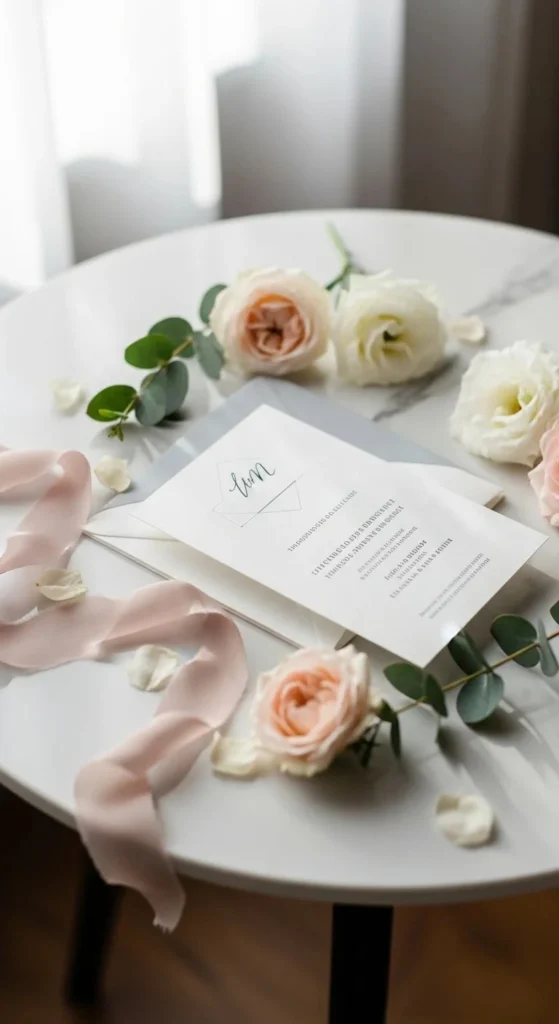
Long sentences make invitations harder to read.
Simple wording works best.
Focus on three details:
- Who is hosting
- Who is getting married
- When and where
Everything else can appear on a details card.
Minimal wording also reduces printing costs.
Short, clean invitations feel modern and elegant.
Check Postage Before Mailing
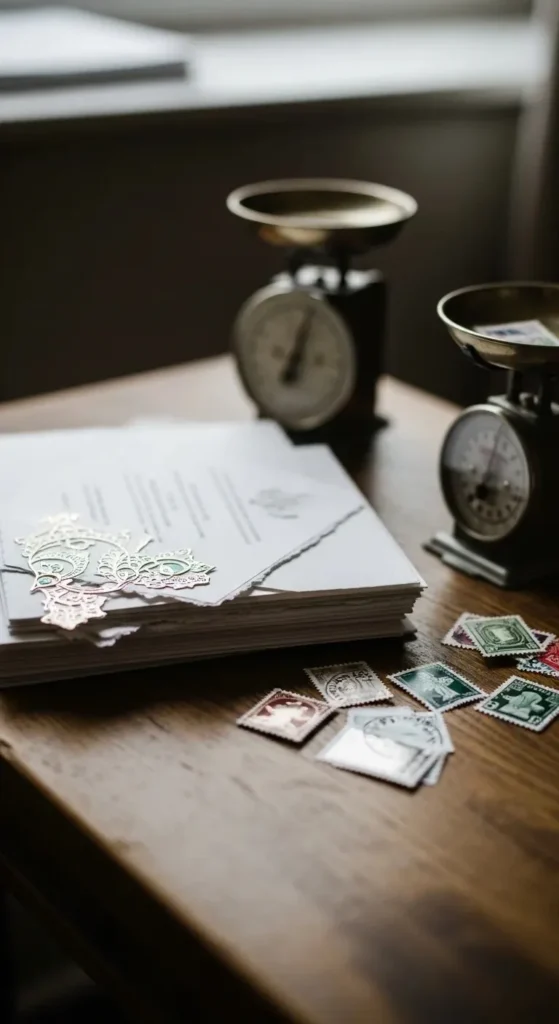
Invitation suites can become heavy.
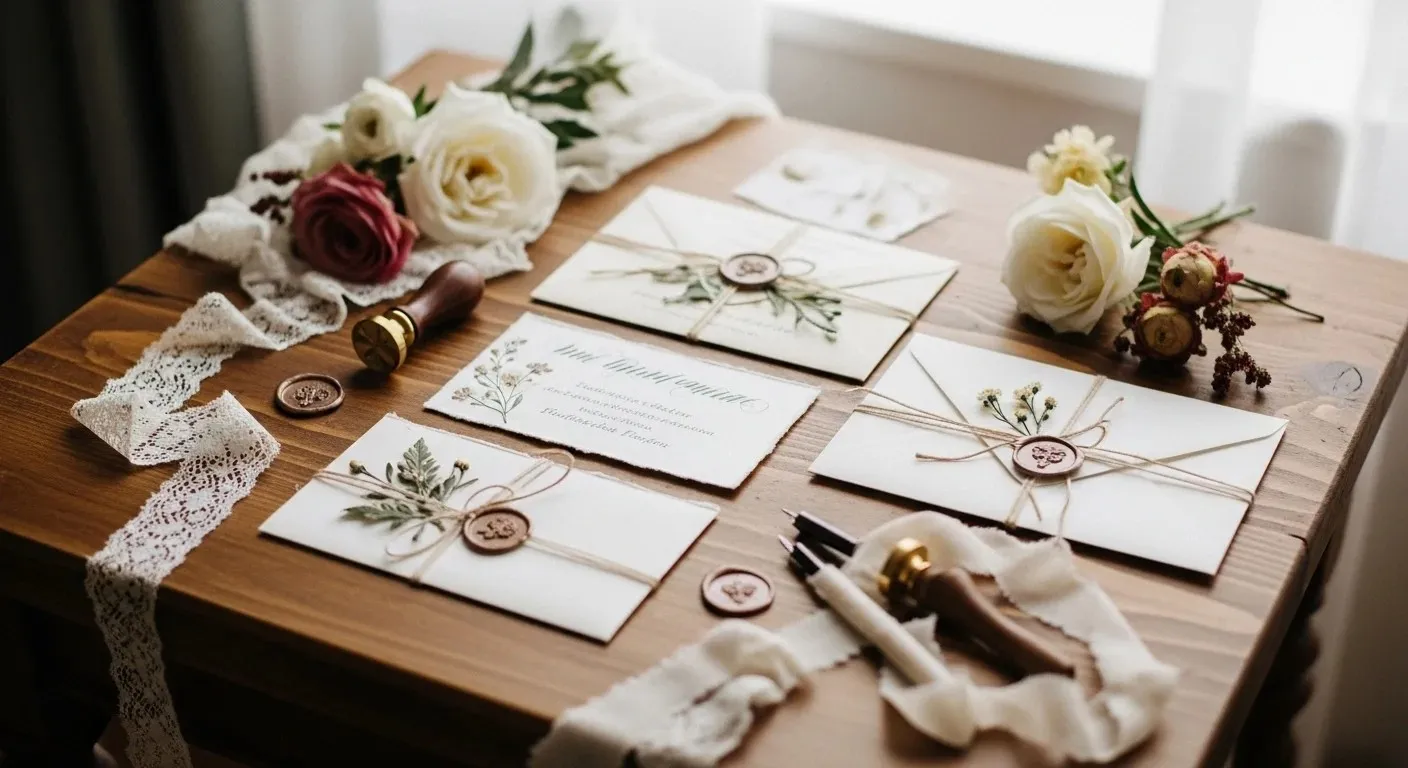
Wax seals, ribbons, and thick paper increase weight.
Take one completed envelope to the post office.
Ask for a postage check before mailing the entire batch.
This prevents invitations being returned due to insufficient stamps.
A small test saves time and frustration.
Mail Invitations All at Once
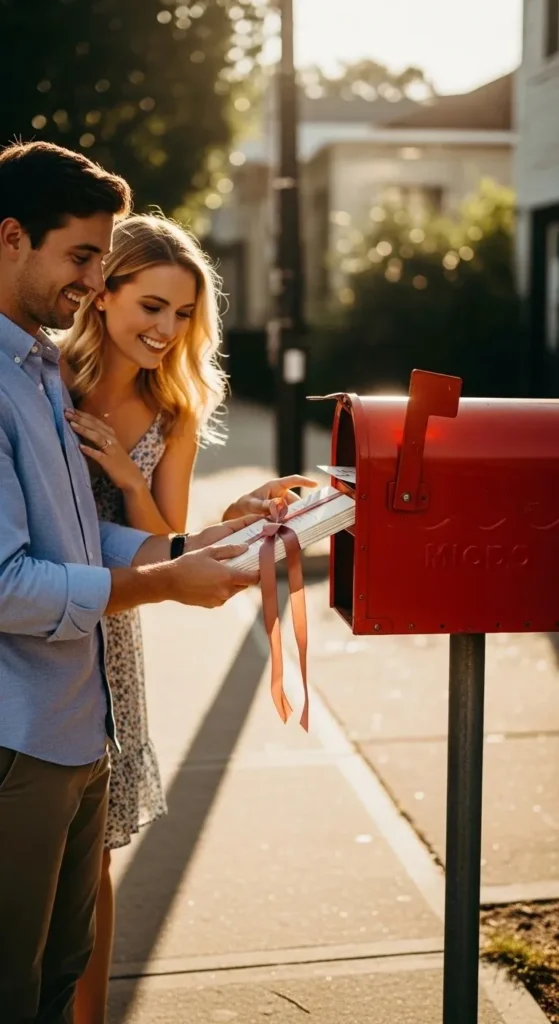
Sending invitations together keeps communication fair.
If some guests receive theirs weeks earlier, confusion may happen.
Set a mailing day and send them all.
Invite friends or family to help stamp envelopes.
Turn it into a small celebration moment.
Use Inner Envelopes for Formal Weddings
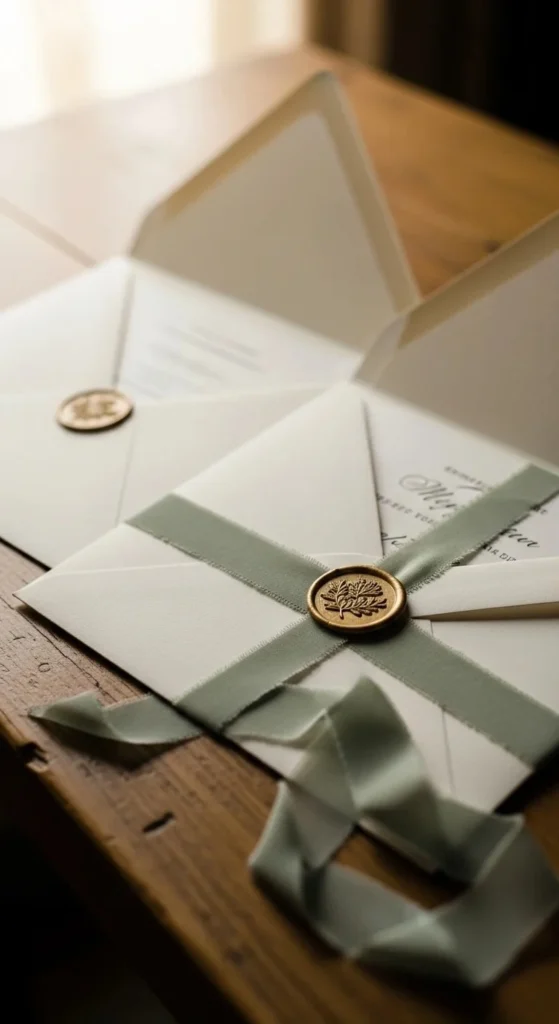
Formal weddings often include inner envelopes.
These protect the invitation and clarify exactly who is invited.
Children’s names can appear here if they are included.
While optional today, they still add a traditional feel.
Couples on a budget may skip them to reduce printing costs.
Follow Up with Guests Who Didn’t RSVP
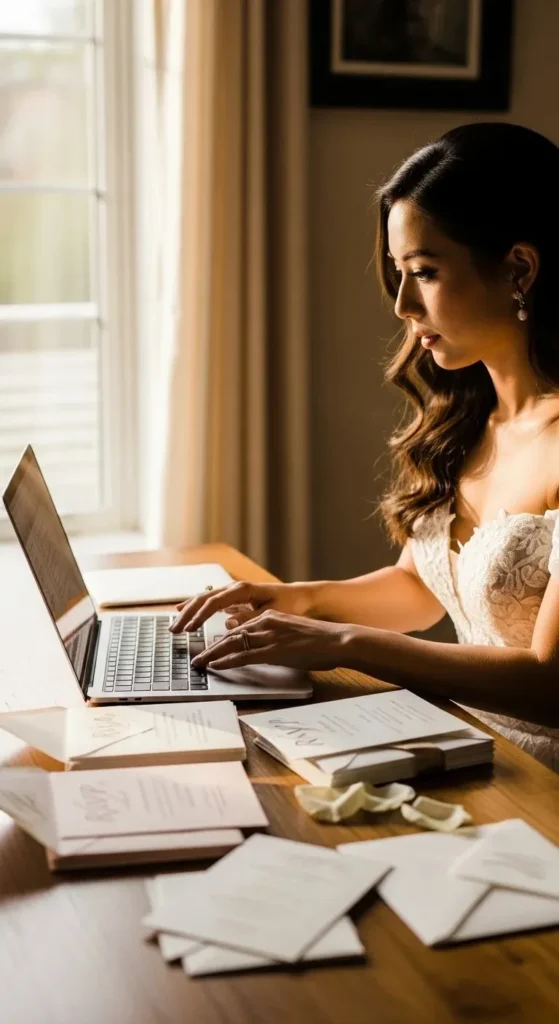
Some guests forget to respond.
A polite reminder helps finalize the guest list.
Send a friendly message a few days after the RSVP deadline.
Keep the tone casual.
Example:
“Just checking if you’ll be able to join us.”
Most people simply forgot.
A quick message solves the problem.
Keep Extra Invitations for Keepsakes
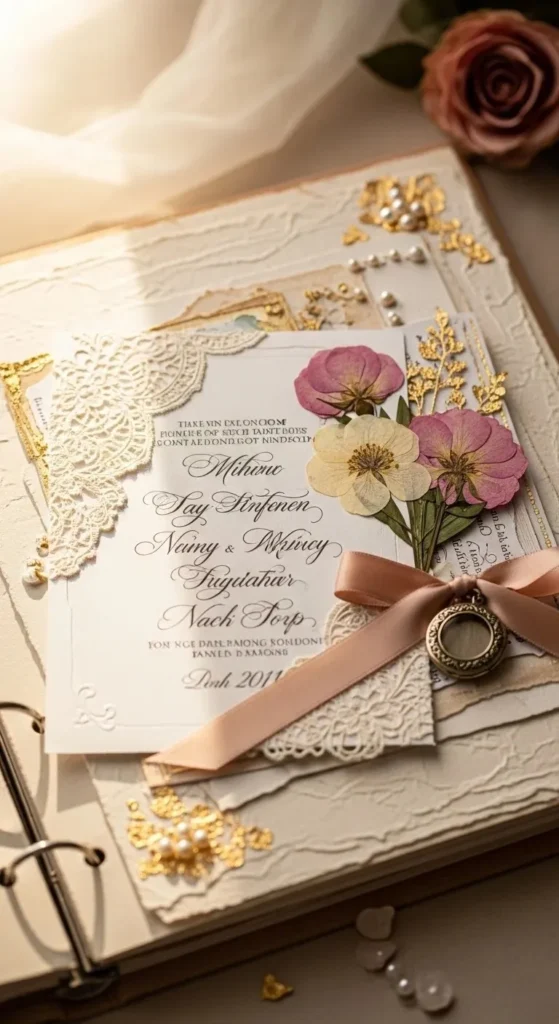
Save a few invitations after mailing.
They make meaningful keepsakes.
Couples often frame one copy or include it in a wedding album.
Extra invitations are also helpful for photographers on the wedding day.
They photograph details like rings and flowers beside the invitation.
Order about 10 extra copies when printing.
Conclusion
Wedding invitations combine style and thoughtful manners. Small details—clear wording, accurate addressing, and early mailing—make guests feel welcomed before the celebration even begins.
The good news is that most etiquette rules cost nothing. Careful proofreading, simple design choices, and thoughtful wording go a long way. Even DIY invitations can look polished with a little planning.
Take time to review each rule while preparing your invitations. A well-organized invitation sets the stage for a joyful, stress-free wedding day.