Choosing engagement rings is one of the most personal decisions you’ll ever make. There are so many styles, metals, stones, and settings out there — it can feel overwhelming fast. But it doesn’t have to be. Whether you’re shopping on a tight budget or ready to splurge, there’s a ring style that fits your love story perfectly. This guide walks you through 45+ real, wearable ideas from classic solitaires to bold colored gems so you can walk into any jeweler (or open any Etsy shop) with total confidence.
Classic Round Solitaire
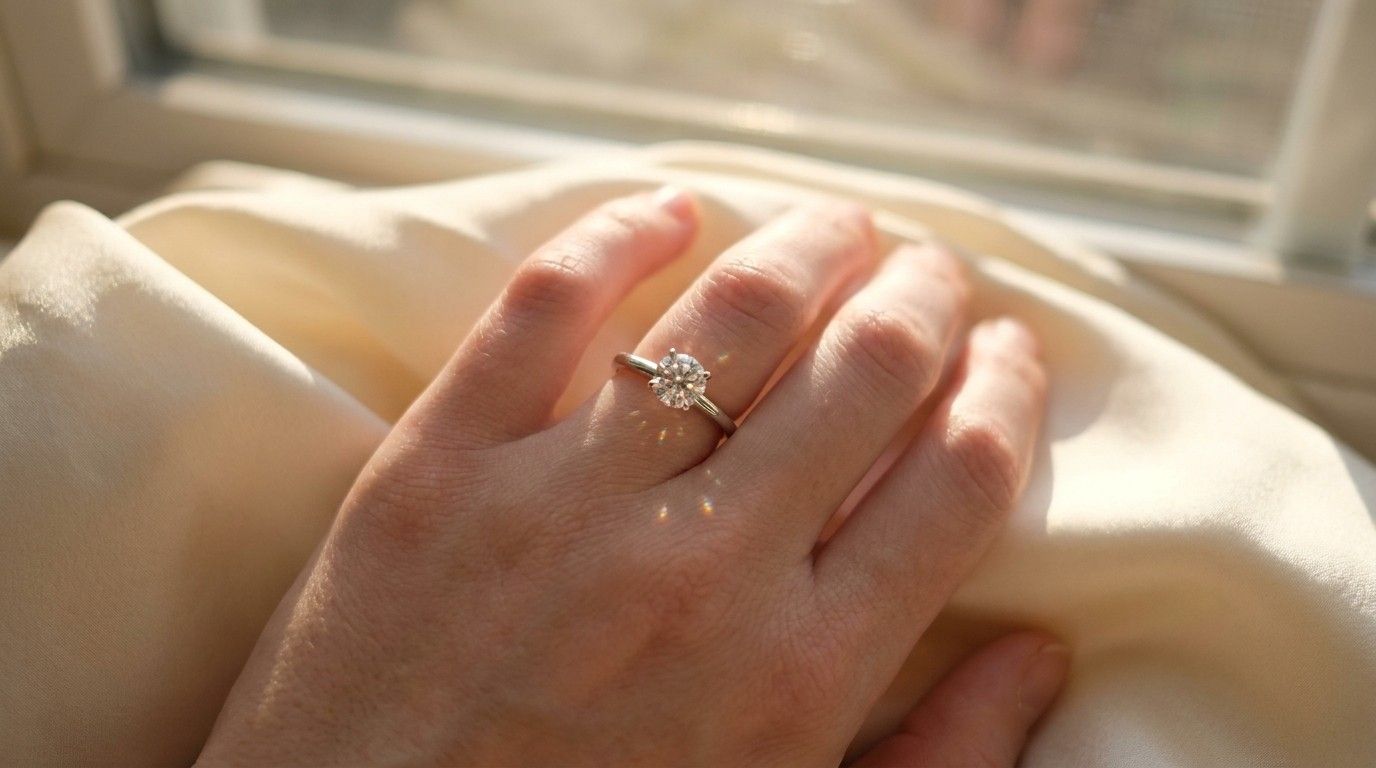
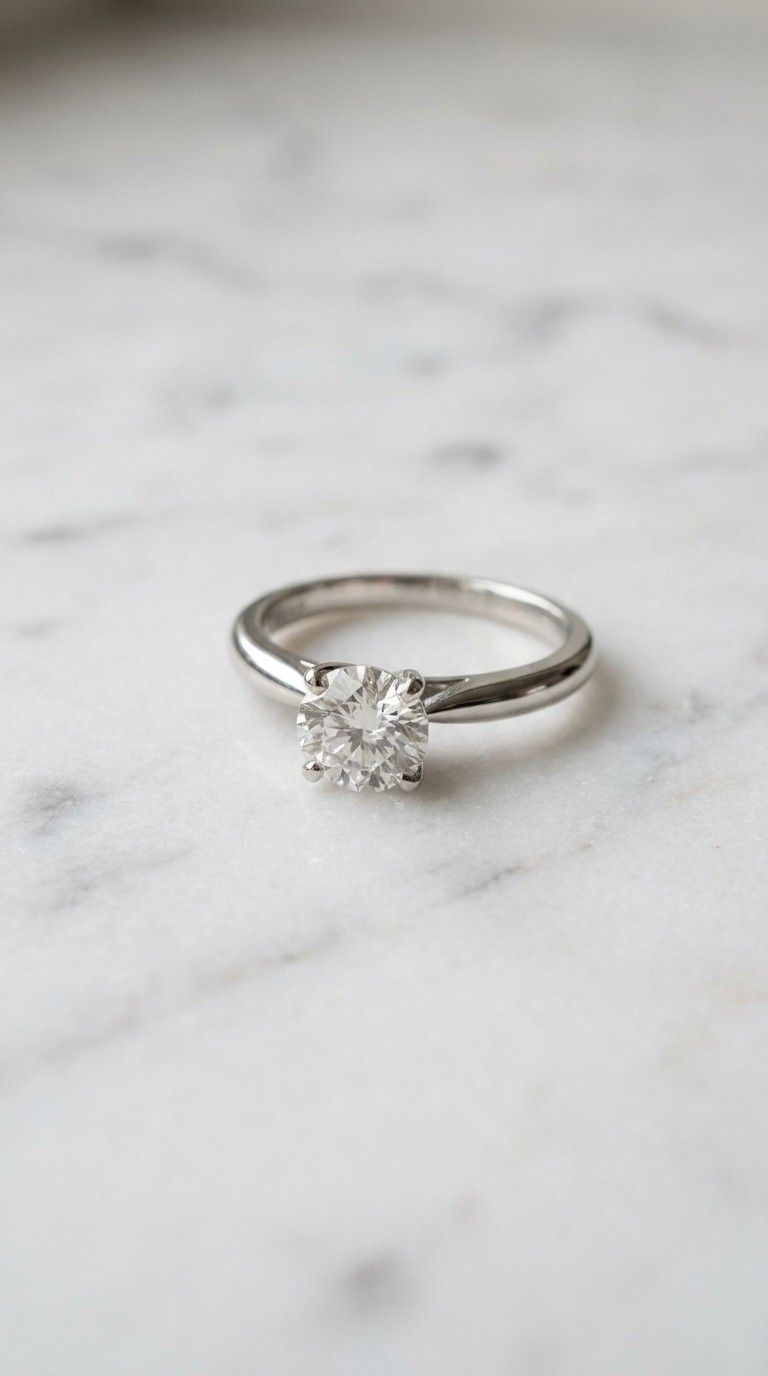 The round solitaire is the most popular engagement ring style — and for good reason.
It’s timeless. It works with everything. And it photographs beautifully.
A single round diamond sits in a four or six-prong setting on a plain metal band. That’s it. No distractions, no fuss.
Why it works: The round cut reflects more light than almost any other shape. Even a smaller stone looks bright and sparkly.
Budget tip: A 0.5-carat round diamond in a simple white gold setting can cost as little as $800–$1,200 at a reputable online retailer like James Allen or Blue Nile. You don’t need a massive stone to get that classic look.
DIY-friendly option: Some couples buy the setting and stone separately. This lets you control the budget more carefully. You can start with a moissanite center stone — which looks nearly identical to diamond — and upgrade later.
The solitaire never goes out of style. If your partner loves clean, elegant jewelry, this is your safest bet.
Oval Cut Diamond Ring
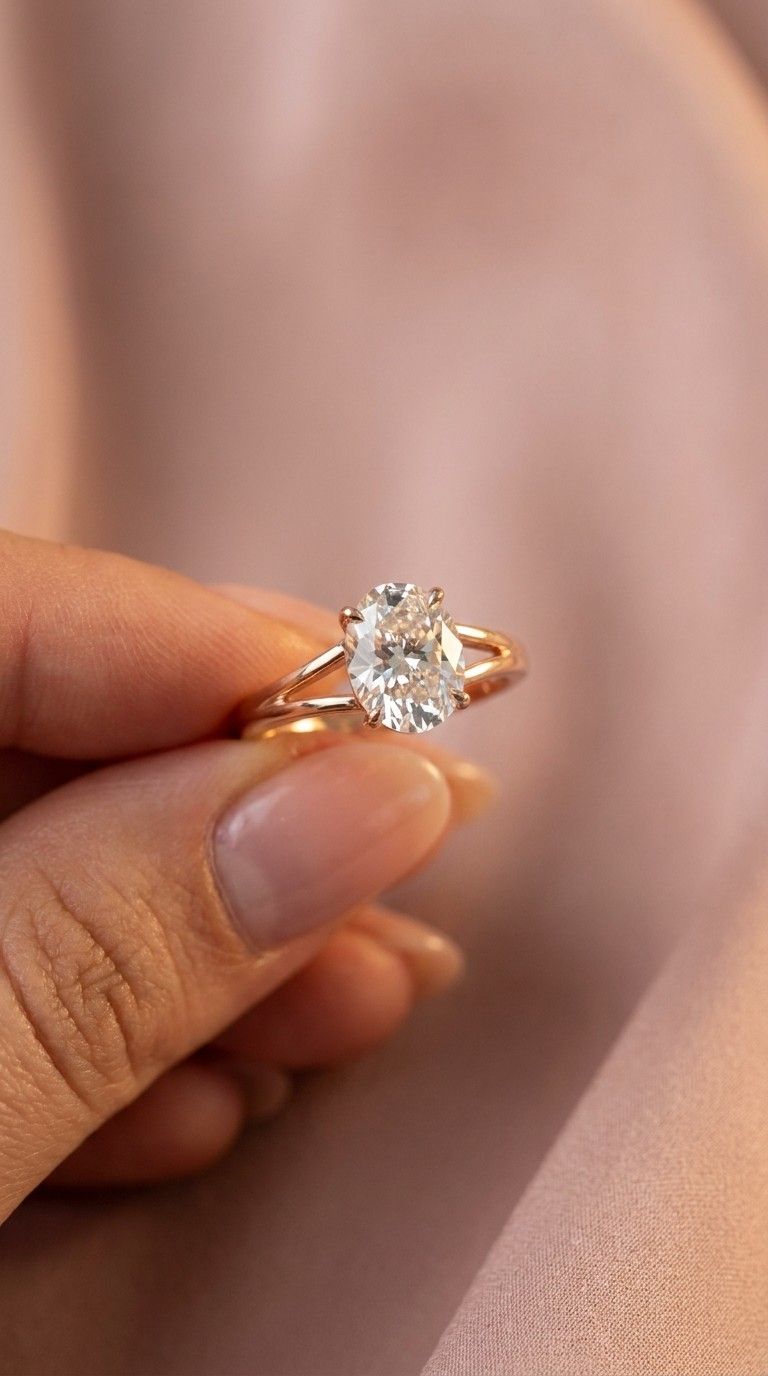
The oval cut is having a serious moment — and it’s easy to see why.
It looks bigger than a round diamond of the same carat weight. The elongated shape also makes fingers look longer and slimmer.
Key details to look for:
- Avoid the “bow-tie effect” (a dark shadow in the center) — ask your jeweler to check for it
- Length-to-width ratio of 1.35–1.50 gives the most flattering shape
- A halo setting can make an oval look even more dramatic
Budget tip: Oval cuts are slightly less expensive than round brilliants. A 1-carat oval in a simple band often costs 10–20% less than a round of the same quality.
Real-life example: A plain yellow gold band with a 0.75-carat oval moissanite runs about $500–$700 online. It looks stunning and costs a fraction of a mined diamond ring.
If your partner follows jewelry trends or loves a vintage-modern feel, an oval cut is a gorgeous choice. It’s romantic without being fussy.
Vintage-Inspired Filigree Ring
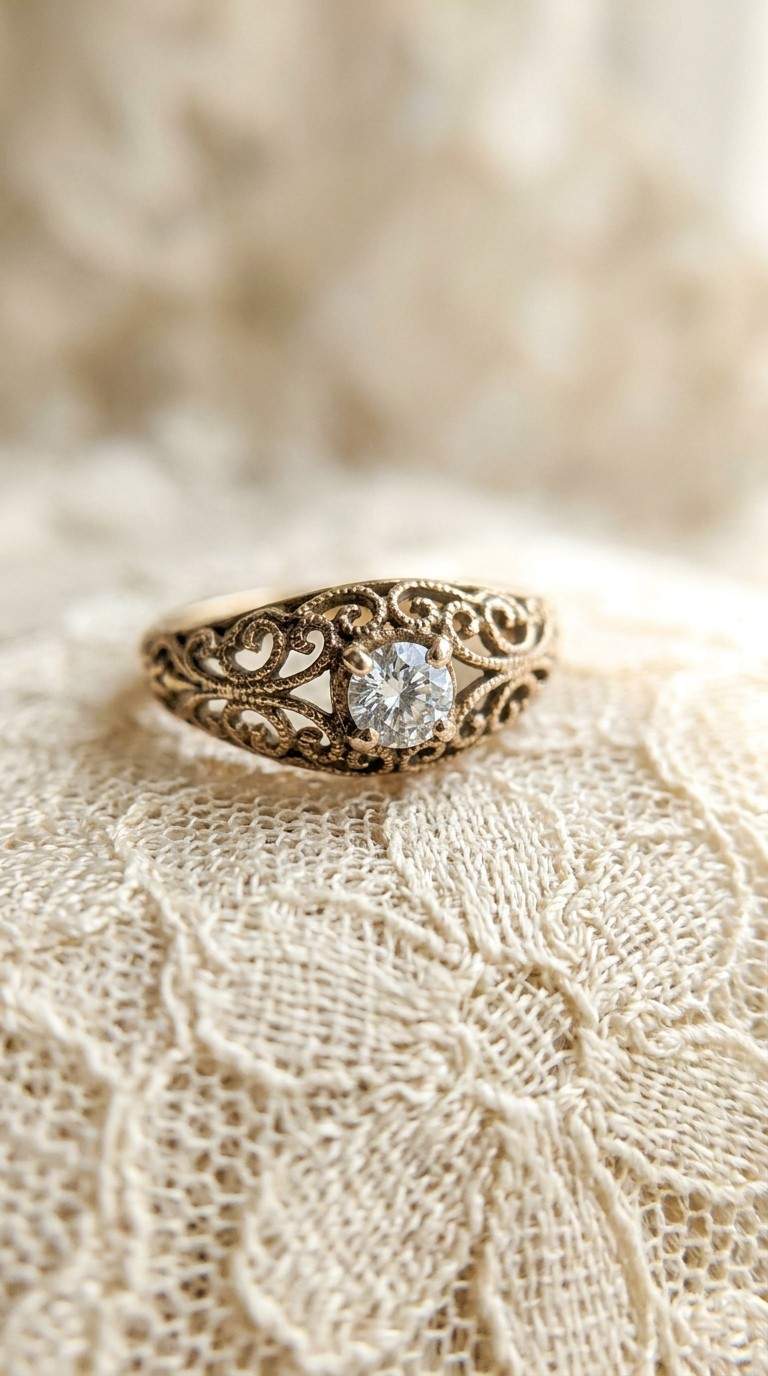
Filigree rings look like something from another era — in the best possible way.
Filigree is a delicate metalwork technique where thin threads of gold or silver are twisted and woven into lacy patterns. The result is a ring that feels handcrafted and one-of-a-kind.
These rings suit partners who love antiques, old movies, or romantic aesthetics.
Where to find them:
- Estate jewelry shops (often much cheaper than new)
- Etsy sellers who specialize in antique reproductions
- Local antique fairs and flea markets
Budget tip: Genuine antique filigree rings from the Edwardian or Art Deco era can be found for $300–$800 at estate sales. They often come with small diamonds already set in them.
If you want new but vintage-looking, many online jewelers sell Art Deco-inspired filigree settings for under $500.
Care note: Filigree is delicate. It’s better for someone who doesn’t do heavy manual work with their hands.
A filigree ring tells a story before you even say a word.
Rose Gold Band with Pear Stone
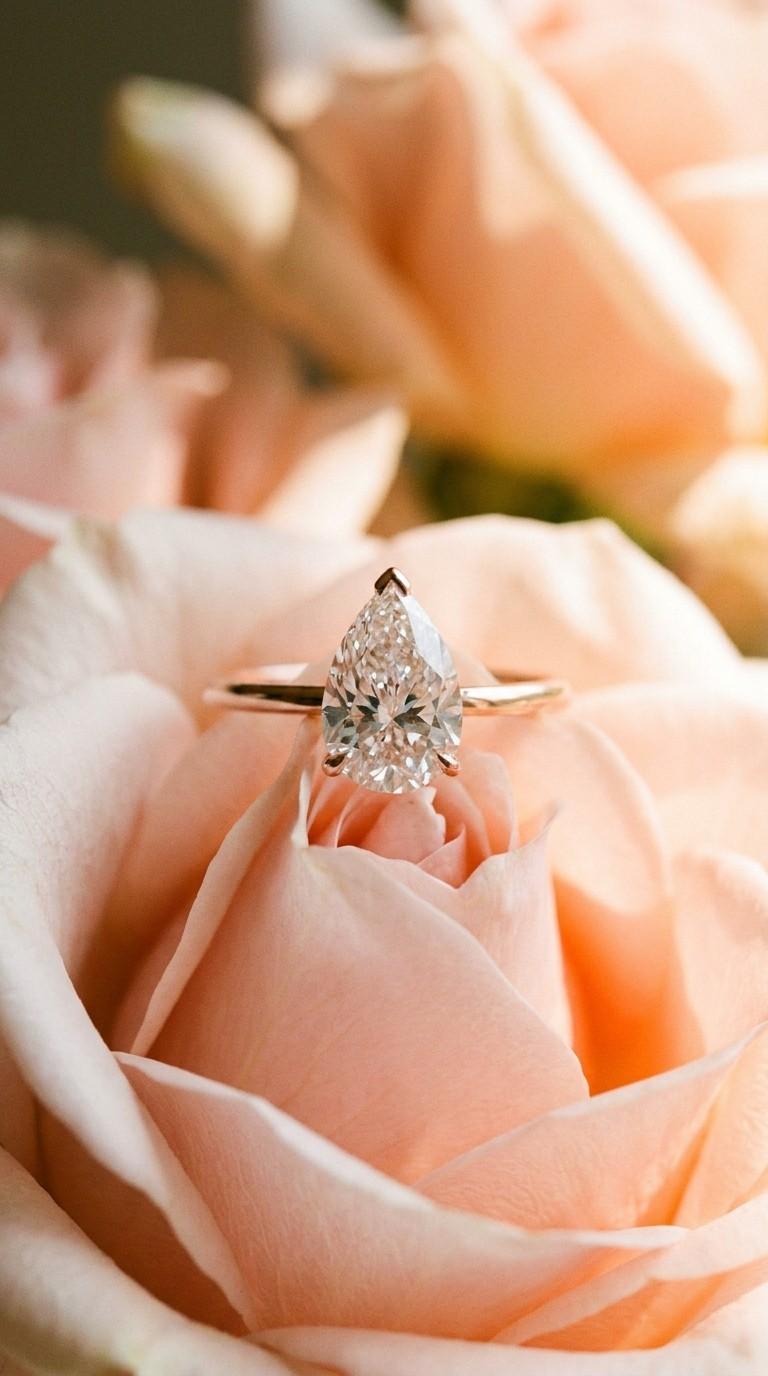
Rose gold is warm, romantic, and surprisingly flattering on every skin tone.
Pair it with a pear-shaped (teardrop) stone and you get one of the most eye-catching ring combinations available.
Pear cut basics:
- Wear the point facing toward the fingertip or toward the wrist — both are correct
- The tip should be held securely with a V-tip prong
- A slimmer band lets the stone take center stage
Why rose gold works here: The blush metal tone complements the pear shape’s soft curves. It feels romantic without being overly traditional.
Budget tip: Rose gold is typically 14k or 18k gold mixed with copper — which is what gives it the pink color. It’s no more expensive than yellow or white gold of the same karat.
A pear moissanite in a rose gold slab setting can cost as little as $400–$600.
Trending variation: A plain, ultra-slim rose gold band with a pear stone — no pave, no halo — looks incredibly modern and minimal right now.
Emerald Cut with Step Facets
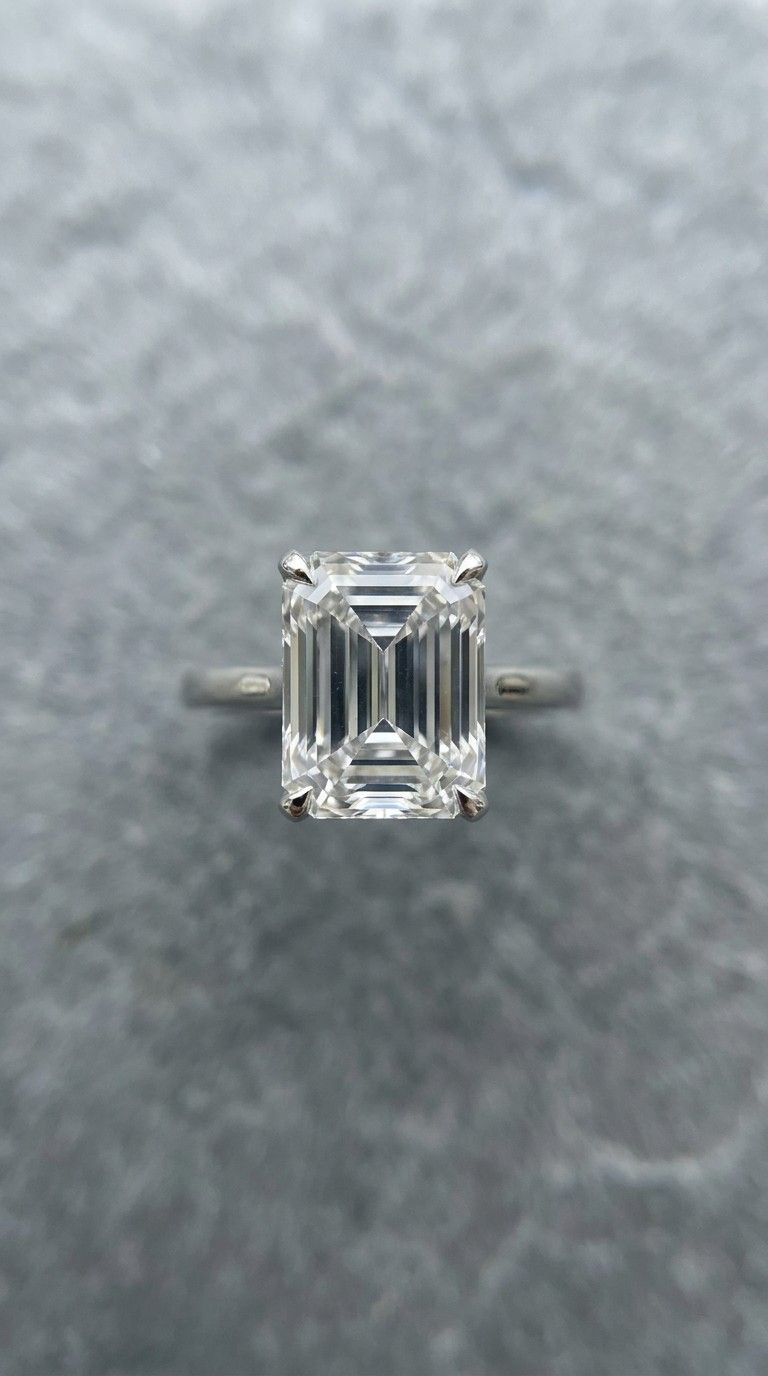
The emerald cut is bold, architectural, and completely unlike any other diamond shape.
Instead of sparkle, it creates a “hall of mirrors” effect — long flashes of light that move as you do. It’s dramatic in a quiet, understated way.
Who it suits: Partners with a modern, minimalist, or fashion-forward style. Think sleek wardrobe, clean-lined spaces, strong aesthetic opinions.
Important: Emerald cuts show inclusions more easily than brilliant cuts. Go for a higher clarity grade (VS1 or above) if your budget allows.
Budget tip: Emerald-cut lab-grown diamonds are widely available and cost 50–70% less than mined stones. A 1-carat lab emerald in a simple platinum setting can be found for $1,500–$2,500 — versus $6,000+ for mined.
Setting recommendation: Keep the setting minimal. A simple four-prong or bezel setting lets the stone’s geometry shine without competing details.
An emerald cut ring makes a real statement — especially on someone who knows exactly what they like.
Three-Stone Engagement Ring
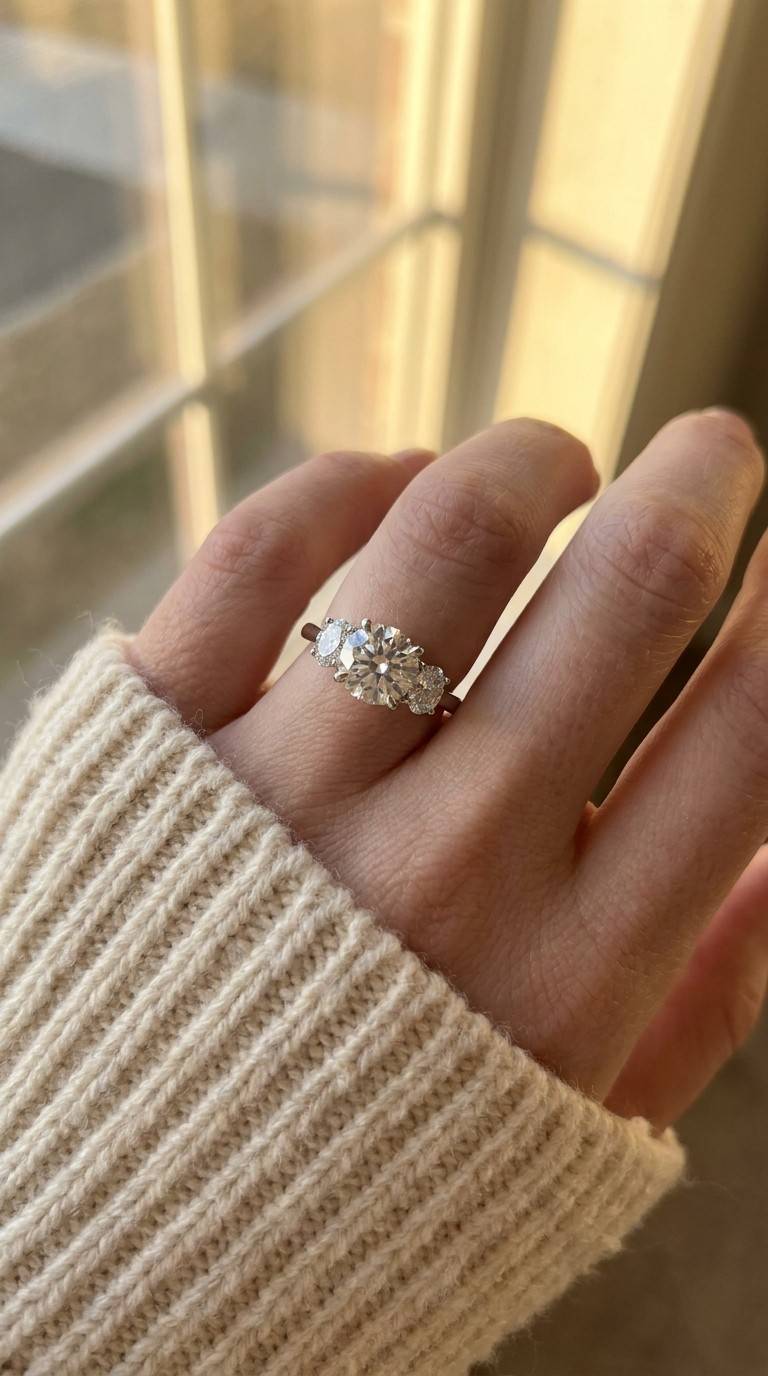
A three-stone ring carries meaning built right into the design.
The three stones traditionally represent past, present, and future — which makes it one of the most sentimental ring styles you can choose.
Stone combinations that work:
- Round center with oval sides (very popular right now)
- Oval center with pear sides for a vintage feel
- All three matching rounds for a classic look
Budget tip: The side stones don’t need to be diamonds. Many couples use sapphires, morganite, or moissanite for the flanking stones — which keeps the cost down while adding color and personality.
A simple three-stone ring with a 0.75-carat center and two smaller side stones can start around $1,200–$2,000 depending on materials.
Customization idea: Pick side stones in your partner’s birthstone color. It makes the ring feel deeply personal and tells a story only the two of you know.
Three-stone rings photograph especially well — the symmetry gives them a balanced, finished look from every angle.
Halo Setting Ring
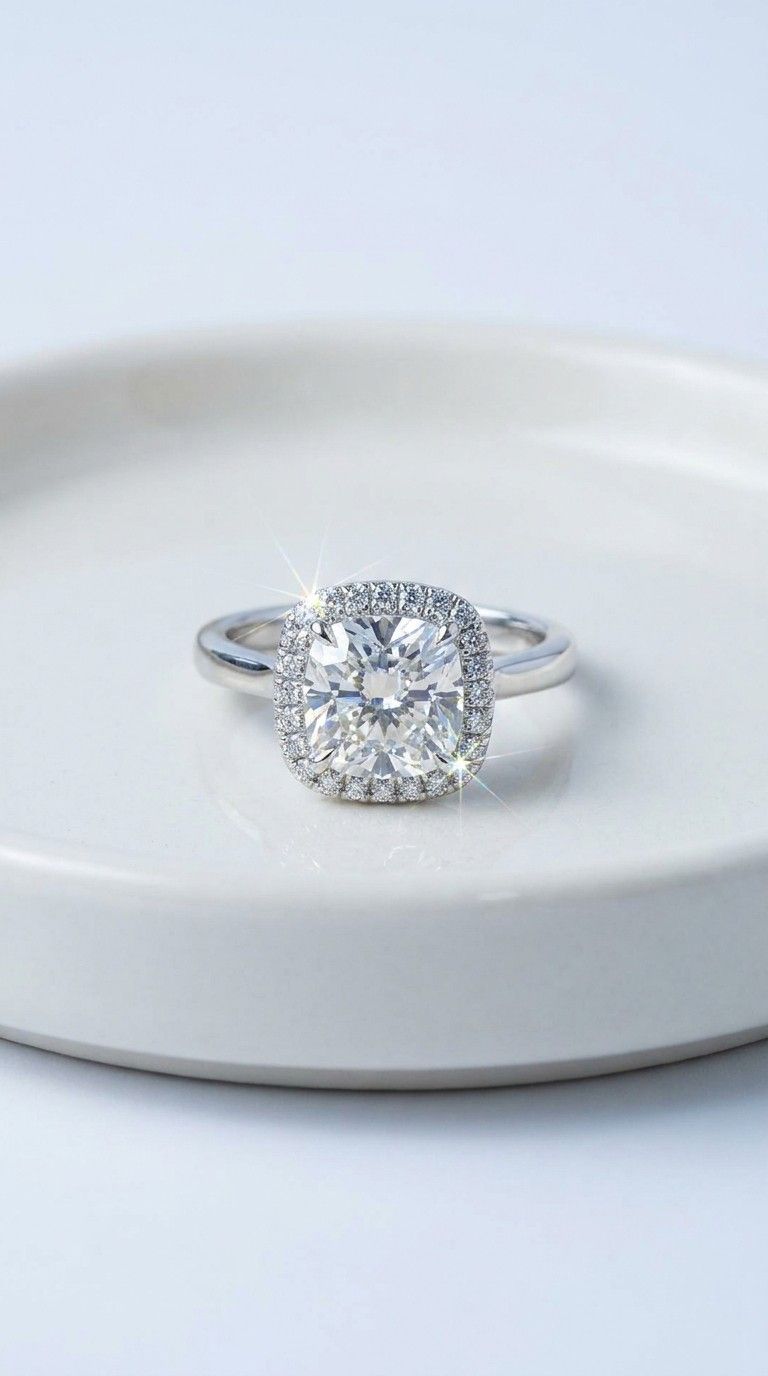
A halo setting places a ring of small diamonds around the center stone.
The effect? The center stone looks dramatically larger. The ring sparkles from across a room.
Halo styles to consider:
- Classic halo — single row of round diamonds surrounding the center
- Double halo — two rows of diamonds for even more impact
- Hidden halo — diamonds set underneath the center stone, visible from the side
Budget tip: A halo setting is one of the smartest ways to stretch your budget. A 0.5-carat center stone surrounded by a halo can look as impressive as a 1-carat solitaire — for a fraction of the price.
Moissanite halos are a wildly popular choice and can look spectacular for under $800.
Care note: Halo settings have many small stones that can loosen over time. Get it professionally checked every year or two.
If your partner loves big, dramatic jewelry and appreciates maximum sparkle, a halo ring will absolutely deliver.
Cushion Cut Ring
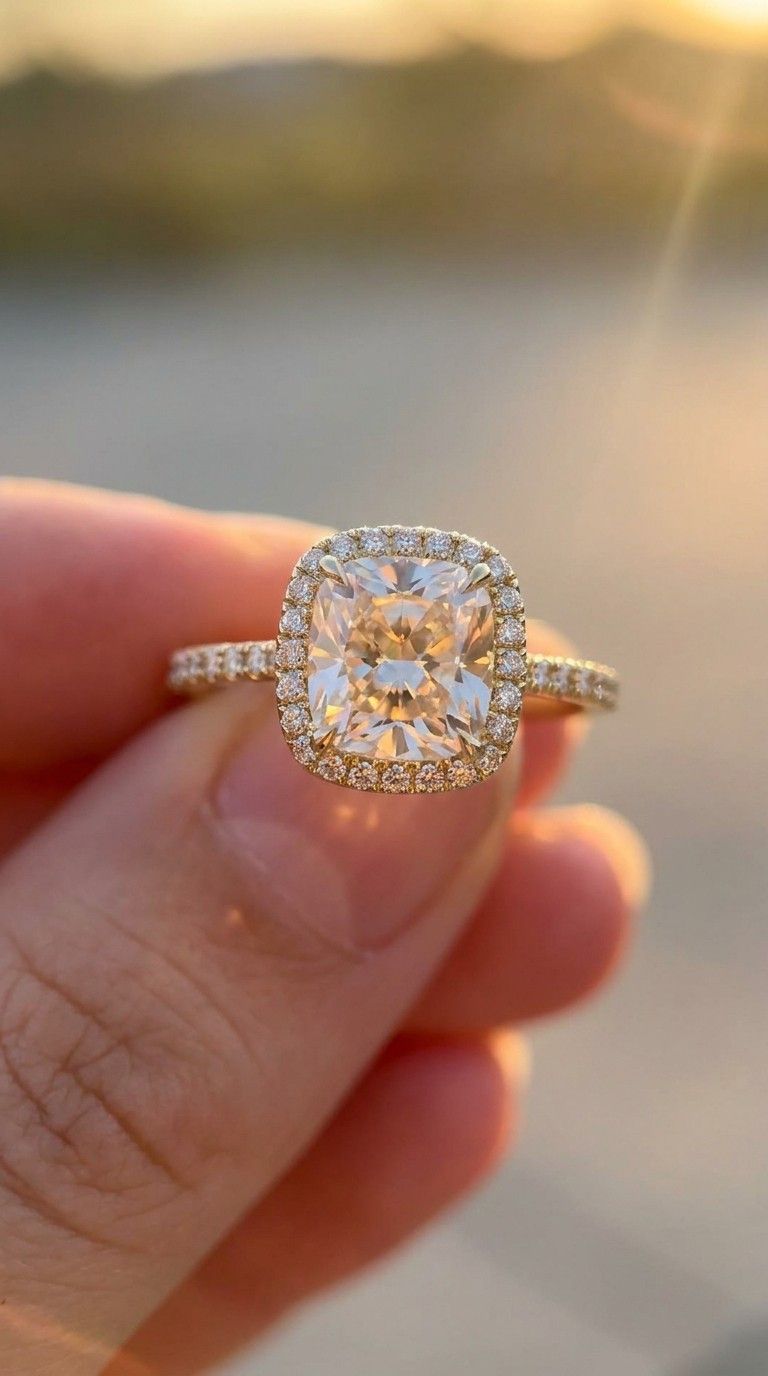
The cushion cut is the softer, warmer alternative to the round brilliant.
It has rounded corners and larger facets — which creates a romantic, almost glowing light effect rather than sharp sparkle. Some people describe it as looking like candlelight inside a diamond.
Who it suits: Partners with a romantic, soft, or feminine aesthetic. It feels warmer than modern cuts.
Popular pairings:
- Cushion cut in a vintage-style yellow gold setting
- Cushion halo ring for a glamorous Old Hollywood look
- Cushion in a plain four-prong solitaire for a clean, timeless result
Budget tip: Cushion cuts come in two varieties — “cushion brilliant” (more sparkle) and “cushion modified brilliant” (softer glow). The modified is often slightly less expensive. Both look beautiful.
A 1-carat cushion moissanite in a gold solitaire setting runs about $600–$900 from online sellers.
Sizing note: Cushion cuts tend to look slightly smaller face-up than round or oval stones of the same carat weight. Keep this in mind when choosing size.
Marquise Cut Ring
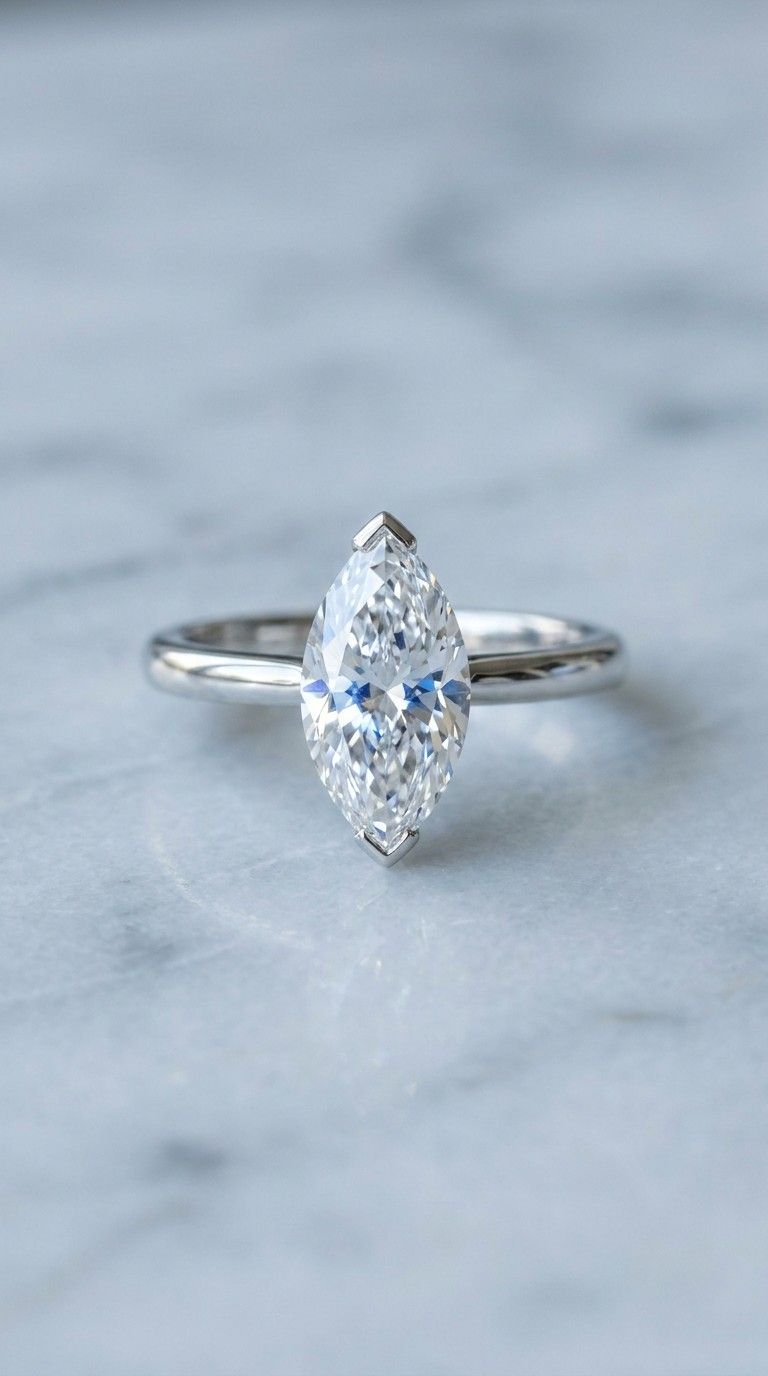
The marquise cut is unlike anything else — it’s dramatic, sharp, and unmistakably bold.
Its elongated shape with two pointed ends maximizes carat weight visually. A marquise looks larger than almost any other cut at the same carat weight.
Why people love it:
- It makes fingers look incredibly long and elegant
- The pointed tips create a striking silhouette
- It has a historical feel — marquise cuts date back to 18th-century France
Important setting detail: Both pointed tips must be protected with V-tip prongs. Without them, the tips can chip.
Budget tip: Marquise cuts are one of the most underrated shapes for budget shoppers. Because they’re less in-demand than rounds or ovals, the price per carat is often lower.
A 1-carat marquise diamond can cost 20–30% less than a round of the same quality.
Styling tip: Wear the stone lengthwise along the finger (vertically) for maximum elongating effect. Some people wear it horizontally as an “east-west” setting for a more modern look.
Bezel Set Ring
A bezel setting wraps the stone in a smooth rim of metal instead of using prongs.
The result is a clean, modern, and very secure ring. There are no prongs to catch on clothing or hair. The stone is fully protected on all sides.
Who it suits: Active people — nurses, athletes, teachers, anyone who works with their hands. It’s also perfect for minimalist style lovers.
Full bezel vs. half bezel:
- Full bezel = metal completely surrounds the stone
- Half bezel = metal on two sides, open on two sides (allows more light into the stone)
Budget tip: Bezel settings are often less labor-intensive than halo or pavé settings. A simple full bezel solitaire can cost less than a comparable prong solitaire.
A round moissanite in a gold full bezel setting can be found for $400–$700 online.
Style note: Bezel rings look especially sharp in yellow gold. The combination of the rounded metal rim and warm gold tone creates a very intentional, architectural look.
Sapphire Center Stone Ring
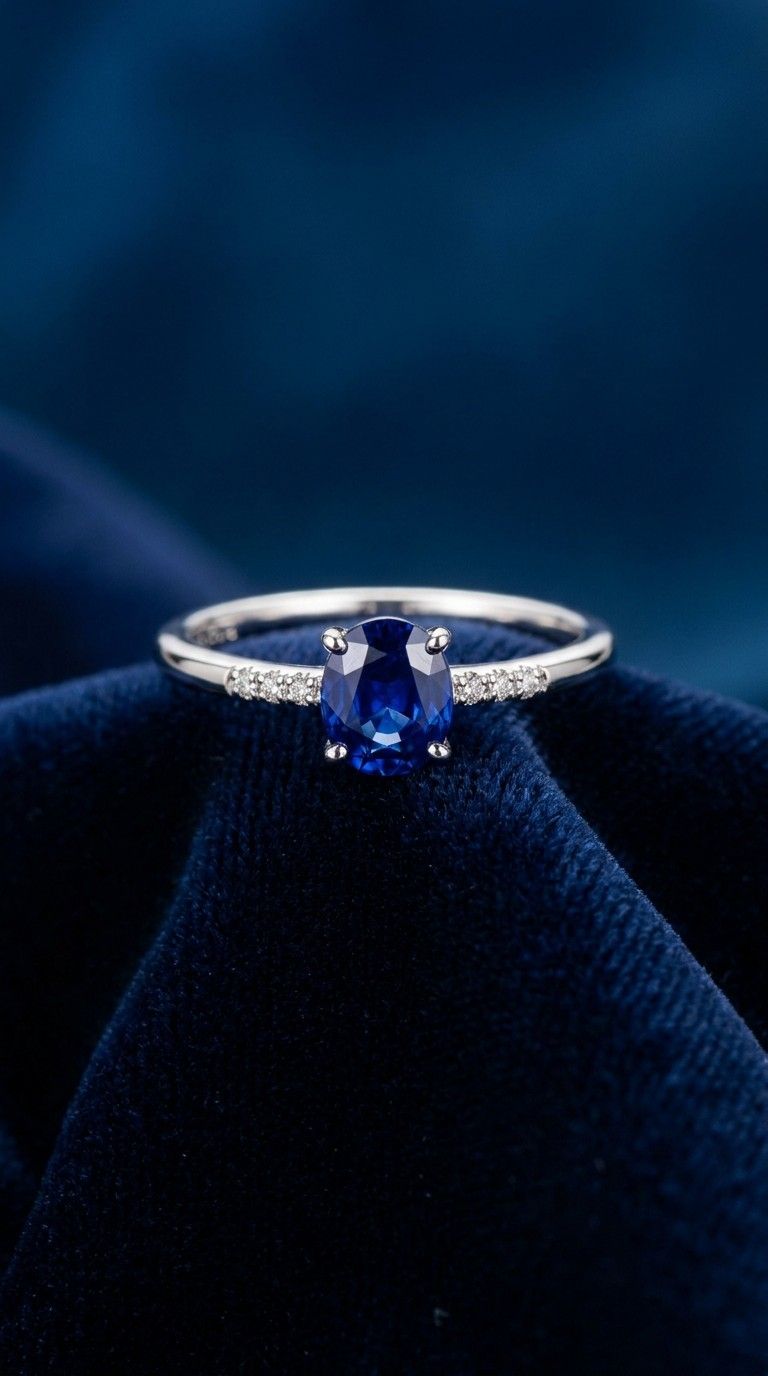
Diamonds aren’t the only option for an engagement ring — and sapphires prove it beautifully.
A deep blue sapphire center stone is bold, romantic, and carries centuries of royal history (Princess Diana’s sapphire ring, now worn by Princess Catherine, is perhaps the most famous engagement ring in the world).
Sapphire colors available:
- Classic royal blue (most popular)
- Cornflower blue (lighter, softer)
- Pink sapphire
- Yellow sapphire
- Padparadscha (a rare peach-pink, very sought after)
Durability note: Sapphires rate 9 on the Mohs scale — just below diamond. They’re extremely well-suited for everyday wear.
Budget tip: A genuine blue sapphire engagement ring with small diamond accents can start around $800–$1,500. Lab-created sapphires are optically identical to mined ones and cost much less — around $200–$600 for a beautiful ring.
If your partner loves color, history, and something different, a sapphire ring is a meaningful and stunning choice.
Morganite Engagement Ring
Morganite is a peachy-pink gemstone that pairs breathtakingly well with rose gold.
It’s part of the beryl family (same as emerald) and has a soft, warm color that photographs beautifully. Many people mistake it for a pink diamond at first glance.
Why couples choose morganite:
- Significantly less expensive than diamonds
- The color is universally flattering
- It looks romantic and unique without being unusual
Budget tip: A 1–2 carat morganite stone costs a fraction of a diamond of the same size. A beautiful morganite ring in rose gold typically costs $300–$800 — well within most budgets.
Durability note: Morganite rates 7.5–8 on the Mohs scale. It’s suitable for everyday wear but not as hard as diamond or sapphire. Protect it from harsh chemicals and hard impacts.
Style pairing: Morganite looks best in rose gold or yellow gold. White gold or platinum can make it look washed out.
If your partner loves soft, feminine jewelry with a warm, romantic feel, morganite is one of the best non-diamond choices available.
Lab-Grown Diamond Ring
Lab-grown diamonds are real diamonds — chemically, physically, and optically identical to mined ones.
The only difference is where they come from. Lab diamonds are grown in controlled environments using the same carbon crystal structure as natural diamonds.
Why choose lab-grown:
- Typically 50–70% less expensive than mined diamonds
- No mining impact
- Certified and graded by the same labs (IGI, GIA)
- Completely indistinguishable to the naked eye — and to most gemological tools
Budget tip: A 1-carat lab diamond in a simple solitaire setting can cost $1,000–$2,000. A comparable mined diamond would be $5,000–$8,000. The savings are significant.
What to look for: Go for a minimum of VS2 clarity and G color for a visibly white, clean stone. Anything above that is mostly indistinguishable to the naked eye but costs significantly more.
Lab-grown diamonds are now widely accepted and have become the mainstream choice for budget-conscious couples. Most major retailers carry them.
East-West Setting Ring
In a traditional ring, the stone points up toward the knuckle. In an east-west setting, the stone lies horizontally across the finger.
It’s a simple change that completely transforms the look of the ring.
Who it suits: Someone with a modern, architectural, or unconventional sense of style. It’s instantly recognizable as different — without being loud about it.
Best shapes for east-west settings:
- Oval (most popular)
- Marquise
- Emerald cut
- Elongated cushion
Budget tip: East-west settings are often simpler in construction than traditional settings — which can mean lower labor costs. Many affordable east-west rings are available online for $600–$1,500.
Style note: An east-west oval in plain yellow gold with a very slim band is one of the most effortlessly cool ring combinations right now. It looks expensive without being complicated.
If your partner has strong personal style and likes jewelry that sparks conversation, an east-west ring will absolutely deliver.
Twisted Band Ring
A twisted band adds texture and visual interest without competing with the center stone.
The band itself becomes part of the design — curling or braiding under the stone in a way that looks organic and handmade.
Twisted band styles:
- Rope twist — two strands of metal wound together
- Infinity twist — the band crosses under the stone in a figure-eight shape
- Vine twist — organic, irregular twisting with small stones set in the metal
Budget tip: Twisted bands are often more affordable than pavé bands because they require less stone-setting labor. Many beautiful twisted solitaires are available for under $800.
Metal suggestions: Yellow gold makes a twisted band look warm and artisanal. White gold gives it a more modern edge.
Pairing tip: Twisted bands look best with a simple solitaire stone — round, oval, or cushion. Let the band be the detail, not the stone.
If your partner appreciates handcrafted, organic jewelry with a story in every detail, a twisted band ring feels genuinely unique.
Colored Gemstone Cluster Ring
A cluster ring groups several smaller stones together to create one big, statement-making centerpiece.
No single expensive stone required. The effect comes from the arrangement.
Popular cluster styles:
- Daisy cluster — round center stone surrounded by petals of smaller stones
- Galaxy cluster — scattered stones in different sizes, like a starfield
- Organic cluster — asymmetrical grouping that looks like a natural formation
Budget tip: This is one of the most budget-friendly ways to get a dramatic ring. Small stones — even real diamonds — cost much less per carat than larger ones. A beautiful cluster ring with genuine colored gemstones can cost $400–$900.
Gemstone combinations that work beautifully:
- Sapphire and diamond
- Emerald, sapphire, and ruby (called a “Tutti Frutti” style)
- Teal tourmaline and white topaz
Cluster rings are extremely popular on Pinterest and Instagram right now. They feel personal, artistic, and completely unlike any traditional engagement ring.
Simple Gold Band with Flush Set Diamond
Sometimes the most striking ring is the simplest one.
A plain gold band with a single diamond set flush into the metal is the definition of “quiet luxury.” The stone sits level with the band surface — no prongs, no setting visible.
Why people love this style:
- No snagging on fabric or hair
- Extremely comfortable for everyday wear
- Looks like it cost far more than it did
- Pairs with any wedding band
Budget tip: Because flush settings use small stones and simple construction, these rings can be very affordable. A 14k yellow gold band with a 0.15-carat flush-set diamond can cost as little as $400–$700.
Sizing note: Flush-set stones can appear smaller than prong-set ones of the same carat. This style celebrates subtlety — it’s for someone who doesn’t need a big stone.
Customization idea: Add a row of flush-set diamonds along the top of the band for a slightly more dramatic effect, while still keeping the ultra-clean profile.
Art Deco Inspired Ring
Art Deco rings come from the 1920s and 1930s — and they’ve never looked more modern.
The style is defined by geometric shapes, symmetry, bold lines, and architectural precision. Think chevrons, fans, hexagons, and sharp right angles.
Common features in Art Deco rings:
- Milgrain edge detailing (tiny beaded border along metal edges)
- Baguette or tapered baguette side stones
- Platinum or white gold with high contrast
- Black enamel or sapphire accents
Where to find them: Estate jewelry shops are the best source for genuine Art Deco rings. Prices vary widely — from $400 for simple pieces to several thousand for complex pieces with high-quality stones.
Reproduction Art Deco rings are widely available online for $500–$1,500.
Who it suits: Someone who loves the 1920s, geometric patterns, vintage fashion, or architectural beauty. This ring makes a strong visual statement.
Stacking Ring Set
A stacking ring set replaces the traditional single engagement ring with a curated group of rings worn together.
It’s incredibly flexible. The look can grow with the relationship — add rings for anniversaries, birthdays, or milestones.
A classic engagement stack:
- One solitaire or simple stone ring as the “hero” piece
- One or two thin diamond or plain metal bands alongside it
- All in matching or complementary metals
Budget tip: You don’t need to buy all the rings at once. Start with one beautiful ring and add to the stack over time. This spreads out the cost naturally.
A simple solitaire plus two thin eternity bands can be assembled for $800–$1,500 total — with rings bought gradually.
Style notes:
- Mixing metals (yellow gold + white gold) is completely acceptable and looks intentional
- Varying textures (polished + hammered) adds visual depth
Stacking rings are particularly popular with people who love fashion and customization. The ring evolves as your relationship does.
Pave Band Ring
A pavé band studded with tiny diamonds adds continuous sparkle from every angle.
Pavé (pronounced “pah-VAY”) means “paved” in French — the band is covered with small stones set so close together that the metal underneath is barely visible.
Pavé variations:
- Full pavé — diamonds all the way around the band
- Half pavé — diamonds only on the top third of the band (more comfortable)
- Micropavé — extremely tiny stones for a delicate, refined look
Budget tip: Half pavé bands use fewer stones and are noticeably less expensive than full pavé. They also tend to be more comfortable and durable.
A pavé solitaire engagement ring with a 0.5-carat center stone can start around $1,200–$2,000 depending on the metal and stone quality.
Care note: Pavé settings require careful maintenance. Small stones can loosen over time. Have a jeweler check the settings annually.
Pavé rings are among the most requested styles — they combine elegance with maximum sparkle in a way that works with almost any stone shape.
Raw or Rough Diamond Ring
A rough diamond ring celebrates the stone exactly as it came from the earth — uncut, unpolished, and completely natural.
The stone looks like a crystal or geometric rock formation rather than a sparkly gem. It’s completely unlike any traditional engagement ring.
Who chooses this style: People with deep connections to nature, geology, or alternative aesthetics. Artists, hikers, free spirits. Anyone who values the natural over the polished.
Budget tip: Rough diamonds are significantly less expensive than cut diamonds. The same carat weight in rough form can cost 70–80% less. A beautiful rough diamond ring can often be found for $300–$800.
Etsy tip: Etsy is the best marketplace for rough diamond rings. Many independent jewelers specialize in this style and offer custom options at very reasonable prices.
Setting styles that work:
- Simple claw prongs to hold the crystal shape
- Bezel setting around the base of the rough stone
- Branch or twig-style bands that complement the organic aesthetic
Moissanite Engagement Ring
Moissanite is not a fake diamond — it’s a completely different gemstone that happens to look remarkably similar to diamond.
In fact, moissanite has more fire and brilliance (the rainbow light effect) than diamond. Under light, it throws rainbow flashes that a diamond doesn’t.
Key facts:
- Mohs hardness: 9.25 (just below diamond’s 10)
- Cost: 80–90% less than diamond
- Appearance: Very similar to diamond, with slightly more colorful fire
- Origin: Originally discovered in a meteor crater in Arizona
Budget tip: A 1-carat moissanite in a simple solitaire setting typically costs $400–$900. A comparable diamond would cost $5,000–$10,000.
Who chooses moissanite: Budget-conscious couples, eco-conscious buyers, and people who want a larger stone than they could otherwise afford.
One thing to know: Some people can distinguish moissanite from diamond under certain lights due to the stronger rainbow flash. If your partner is particular about this, view stones in different lighting before buying.
Teal Sapphire Ring
Teal sapphires are one of the most sought-after colored gemstones in engagement jewelry right now.
The color sits somewhere between ocean blue and forest green — it shifts depending on the light. In sunlight it looks blue. Indoors it can appear more green.
Why teal sapphires are special:
- No two stones are exactly alike — each one has a unique color depth and shift
- The color is dramatic and unusual without being garish
- Sapphire is extremely durable (9 Mohs) — ideal for daily wear
Budget tip: Teal sapphires are less expensive than blue sapphires and dramatically less expensive than diamonds. A beautiful 1–1.5 carat teal sapphire ring in yellow gold can cost $600–$1,500 depending on the stone’s depth of color.
Setting recommendation: Yellow gold bezel or four-prong settings show off the stone’s color most effectively. White gold can compete with the green undertones.
Where to find them: Etsy, local gemstone dealers, and smaller online jewelers tend to carry teal sapphires. Major chain jewelry stores rarely stock them.
Half-Eternity Diamond Band as Engagement Ring
Not everyone wants a center stone. A half-eternity band — a row of matched diamonds across the top of the ring — is a refined, modern alternative.
Why couples choose this:
- It sits flat on the finger — extremely comfortable
- It stacks perfectly with other bands
- The look is clean, continuous, and effortlessly wearable
- No single stone to worry about losing or damaging
Budget tip: Because the stones are small and uniform, a half-eternity band uses less diamond material per stone. A beautiful 14k gold half-eternity band with 0.5 carats total weight can be found for $600–$1,200.
Variations:
- Channel set (stones set in a groove between two metal walls)
- Pavé set (stones in tiny prong settings)
- Bezel set (each stone in its own metal cup — most secure option)
Stacking idea: Wear a half-eternity band with a plain matching band on either side for a three-ring stack that looks intentional and polished.
Leaf and Vine Ring
Botanical-inspired rings bring nature right into your jewelry.
Leaf and vine engagement rings feature bands shaped like branches, leaves, or vines — often with small accent stones set into the metalwork as dewdrops or buds.
Why nature rings resonate:
- They feel deeply personal and handcrafted
- No two nature-inspired rings look exactly alike
- They suit outdoorsy couples, nature lovers, gardeners, hikers
Center stone pairings: A green tsavorite garnet or teal sapphire looks especially fitting surrounded by leaf metalwork. A white diamond offers a beautiful contrast against the organic setting.
Budget tip: Many independent jewelers on Etsy specialize in nature-inspired rings. Custom leaf rings can often be made for $500–$1,200 in yellow or rose gold with a semi-precious center stone.
DIY option: Some couples work directly with local artisan jewelers who specialize in wax carving — the method used to create organic shapes before casting in metal. It’s often more affordable than you’d expect for a custom piece.
Black Diamond Ring
Black diamonds make a statement that no other stone can match.
They’re opaque, matte, and dramatic. Under light, they show a subtle metallic shimmer rather than sparkle. It’s a completely different energy from a white diamond.
Who chooses black diamonds:
- People who love dark, dramatic aesthetics
- Fans of gothic or alternative fashion
- Couples who want something genuinely one-of-a-kind
Budget tip: Black diamonds — both natural and treated — are significantly less expensive than white diamonds. A 1-carat black diamond in a simple setting can cost $300–$700.
Important distinction:
- Natural black diamonds are extremely rare and expensive
- Treated black diamonds (regular diamonds heated or irradiated to become black) are affordable and widely available
- Lab-created black diamonds are the most budget-friendly option
Setting recommendation: White gold or silver-toned metal creates maximum contrast. Yellow gold gives a warmer, more bohemian feel.
Double Band Split Shank Ring
A split shank ring has a band that divides into two as it approaches the center stone — framing the stone like a V or wishbone shape.
It’s one of the most visually dramatic ring designs without requiring a large center stone.
Why split shanks work:
- They make the center stone look bigger and more elevated
- The design creates visual width on the finger
- The two pathways can be set with small diamonds for extra sparkle
Budget tip: A split shank ring with a modest center stone still looks impressive because the setting does so much visual work. A 0.5-carat center in a pavé split shank can look as striking as a 1-carat solitaire.
Variations:
- Simple split with no accent stones (very clean)
- Pavé-set split for maximum sparkle
- Twisted split for an organic feel
Important note: The wider profile of a split shank ring can be harder to size later. Confirm ring size carefully before purchasing.
Signet-Style Engagement Ring
Signet rings — traditionally flat-faced rings used to press wax seals — are being reimagined as engagement rings for any gender.
A diamond or gemstone set into a flat signet face looks completely different from a traditional solitaire. It’s architectural, bold, and unmistakably modern.
Who it suits: People who love jewelry with history. Men or non-binary individuals who prefer a ring that doesn’t read as traditionally feminine. Anyone with a minimalist or vintage aesthetic.
Customization options:
- Engrave initials or a symbol around the stone
- Use a birthstone instead of diamond
- Choose a carved gemstone face (intaglio) instead of a set stone
Budget tip: Signet rings are typically heavier than delicate solitaires (more metal), but the setting labor is often simpler. Gold signet rings with a small diamond face can start around $600–$1,200.
Signet-style engagement rings are still relatively rare — which means they make an instant statement and conversation starter.
Vintage Estate Ring
An estate ring is a pre-owned ring — from any era — sold through estate sales, antique dealers, or jewelry shops.
Buying an estate ring is one of the best ways to get a high-quality ring at a fraction of the price of new.
Why estate rings are special:
- They come with history — someone loved and wore this ring
- The craftsmanship of older rings (hand engraving, old mine cuts) is often extraordinary
- Prices are frequently well below retail for comparable new rings
Where to shop:
- Local estate jewelry stores
- Online: Erstwhile Jewelry, Doyle & Doyle, Lang Antiques
- Estate auctions and antique fairs
Budget tip: An estate ring with a genuine old mine cut diamond (the predecessor to today’s brilliant cut) can often be found for $800–$2,500 — while a new ring with a comparable stone would be three to five times more.
Important: Always buy estate rings from reputable dealers who can provide a grading certificate or appraisal. Get it independently appraised before purchase if possible.
Celestial Moon and Star Ring
Celestial-themed engagement rings feature moons, stars, sunbursts, or planets in their design.
They’re romantic in a dreamy, otherworldly way — perfect for stargazers, dreamers, and night owls.
Popular celestial elements in rings:
- Crescent moon prongs holding a round center stone
- A starburst halo surrounding the main gem
- A moonstone center stone (which shows a glowing blue sheen called adularescence)
- A sunburst design radiating out from the center
Moonstone note: Moonstone is one of the most magical-looking gemstones — its blue glow seems to come from within. However, it rates only 6–6.5 on the Mohs scale. It’s better suited for someone who doesn’t wear their ring during heavy activity.
Budget tip: Celestial rings with moonstone or white topaz centers can be found on Etsy for $200–$600. Yellow gold settings with diamond accents run $800–$1,500.
If your partner has a whimsical, romantic, or spiritual connection to the night sky, a celestial ring will feel like it was made specifically for them.
Conclusion
There’s no single “right” engagement ring. The right ring is the one that makes your partner’s eyes light up the moment they see it.
Whether that’s a classic round solitaire in platinum, a rough diamond in a twig-style gold setting, or a teal sapphire surrounded by tiny pavé diamonds — what matters most is that it reflects who they are and what your relationship means.
Start by thinking about your partner’s everyday style. Look at the jewelry they already wear. Note the metal tones, the scale, the level of ornamentation. That’s your most reliable guide.
Then set a realistic budget — and know that stunning rings exist at every price point. A $500 moissanite ring in a beautiful setting can outshine a $3,000 diamond ring in the wrong style. Value is in the fit, not the price tag.
Use this list as a starting point. Save the images that speak to you. Bring them to a jeweler or an Etsy seller and start a conversation. The ring that perfectly captures your love story is absolutely out there — and now you know exactly where to look.